

Learn about the GrabCAD Platform
Get to know GrabCAD as an open software platform for Additive Manufacturing
Visit our new homepage


Project from 3D constructor - https://dubina.biz
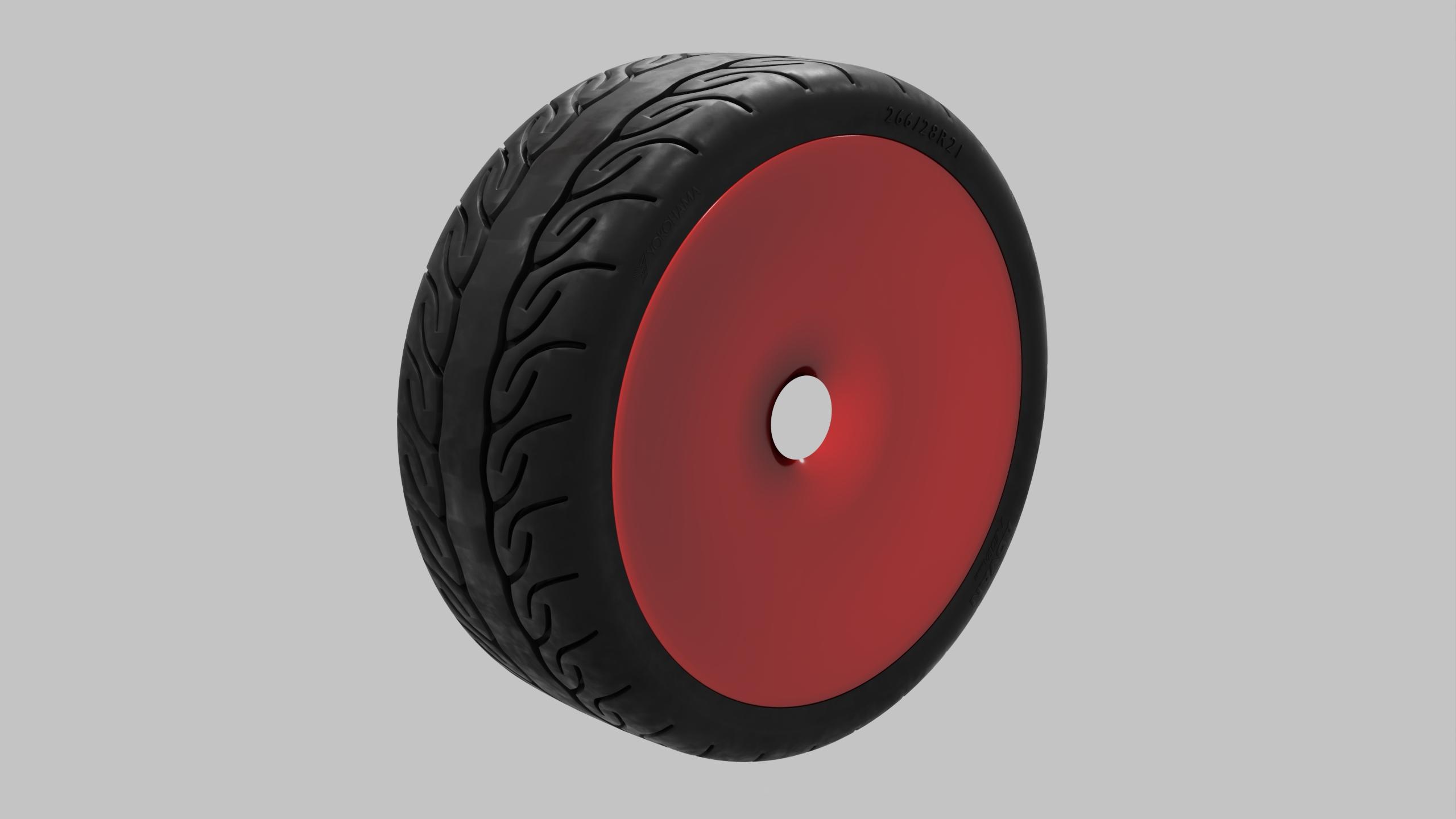
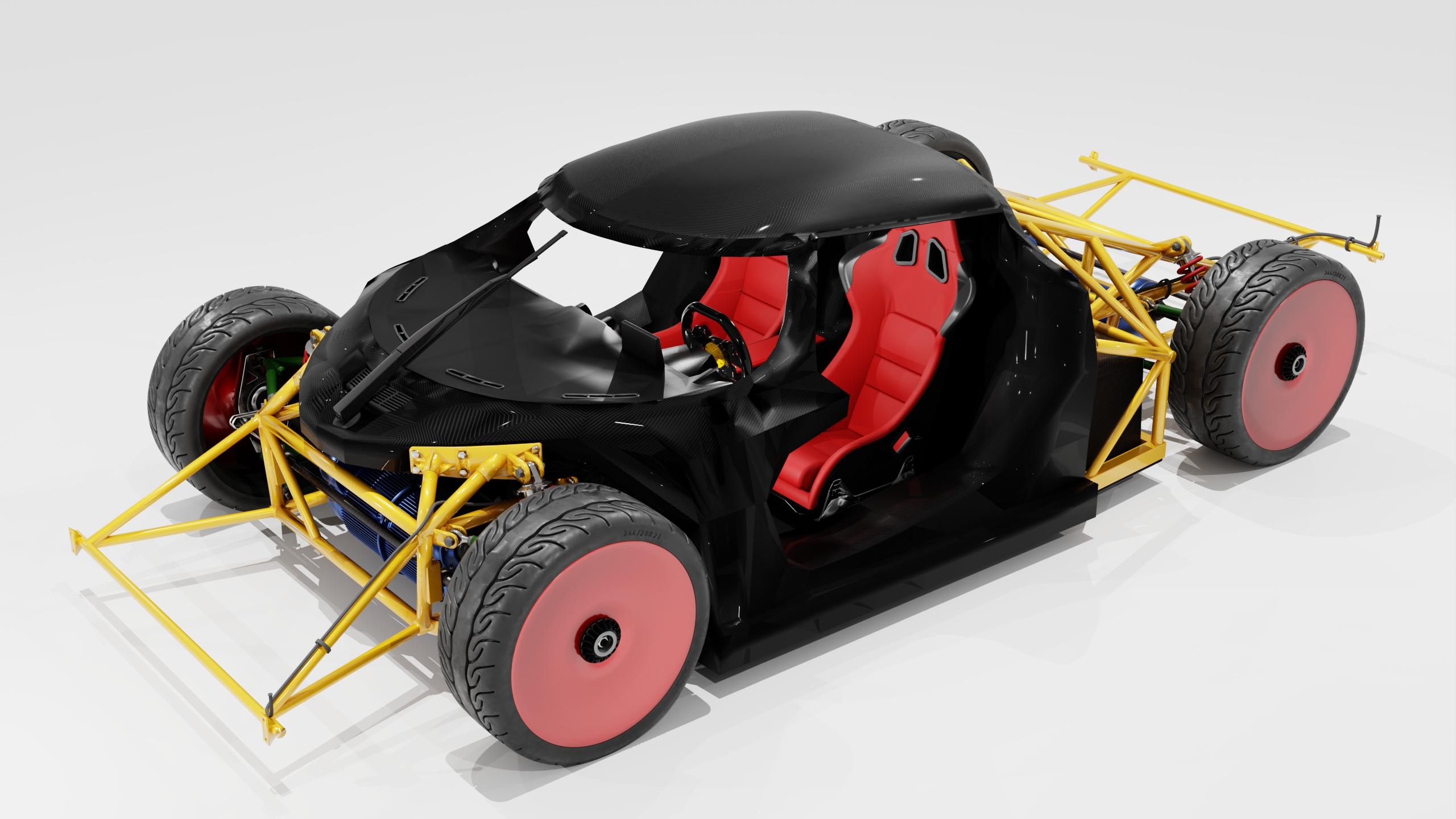
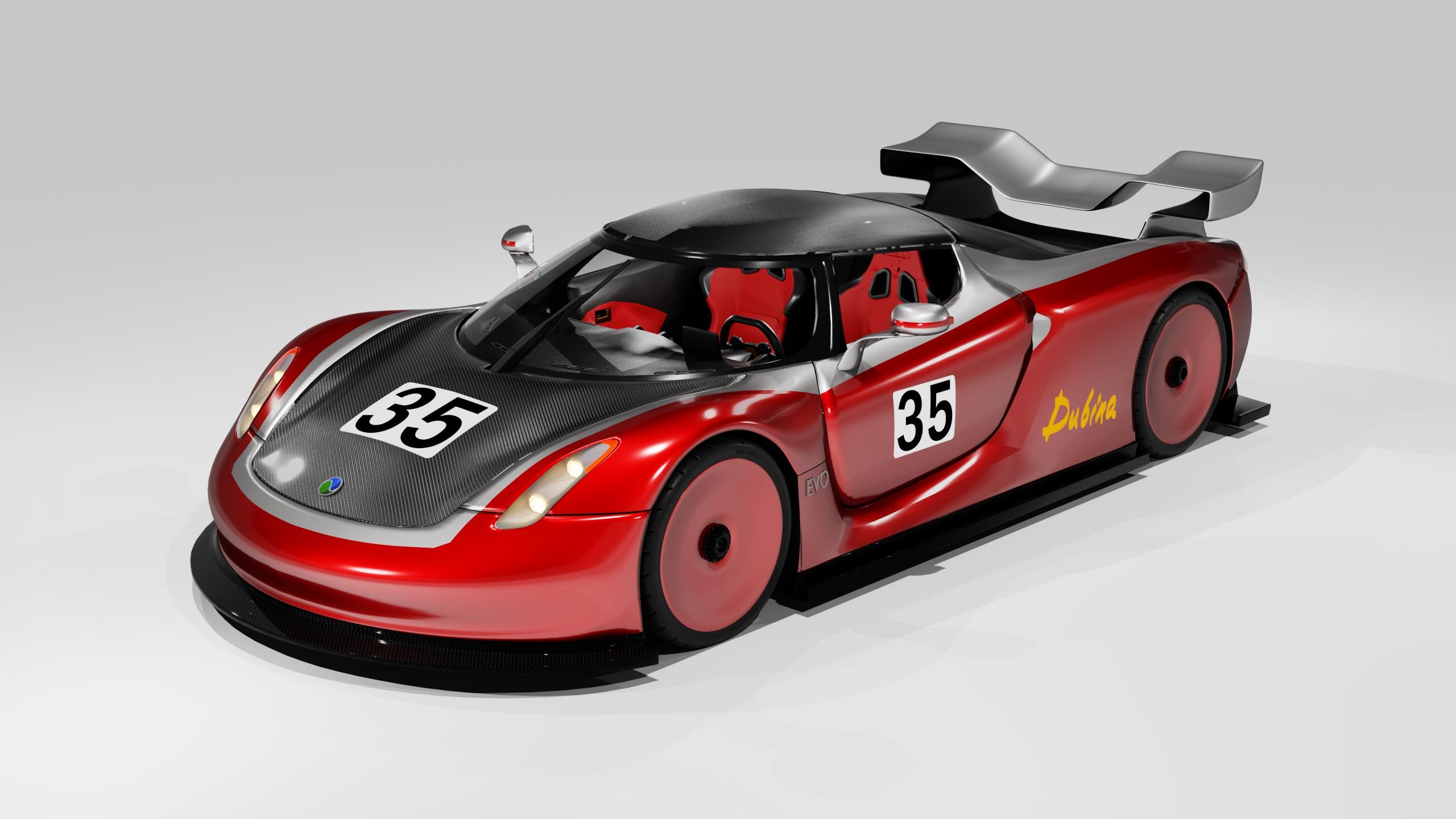
The car wheel converts its rotation into the forward motion of the car, and the torque supplied from the engine through the shaft into traction. The wheel reduces friction, facilitating movement due to rolling. The energy of movement is lost due to the contact of the wheel with the road. This is called rolling resistance, which is mainly the loss due to tire deformation. The wheel connects the car to the road. It serves to spring the car, ensure its movement and change the direction of movement. The wheel is characterized by controllability, the length of the braking distance on wet and dry roads, stability when driving in a straight line and when cornering at high speed. The wheel can also provide advantages when moving on uneven surfaces if the radius of the wheel is large enough compared to the unevenness. The wheel consists of a pneumatic tire and a disk. A tubeless low-profile tire is installed on the car wheel. A pneumatic tire smooths out road irregularities and, together with the suspension, softens and absorbs shocks and impacts from road irregularities, ensures a smooth ride of the car, as well as reliable adhesion of the car wheels to the road surface. A tubeless tire does not have a tube. In terms of design, it is close to a tube tire and is almost no different in appearance. A special feature of a tubeless tire is the presence of a 2 mm thick sealing airtight rubber layer on its inner surface, which holds the compressed air inside the tire. In addition, there is a sealing rubber layer on the sides of the tire, providing the necessary tightness at the junction of the sides and the rim of the wheel. The frame material of a tubeless tire is also characterized by high air impermeability, since nylon cord is used for it. The landing diameter of a tubeless tire is reduced, it is mounted on a sealed rim. The tire valve is hermetically secured by a nut with a washer on two rubber sealing washers directly in the rim of the wheel. Compared to tubed tires, tubeless tires improve traffic safety, are easy to repair, heat up less during operation, are more durable, have a simpler design, and weigh less. The increased traffic safety is explained by the lower sensitivity of a tubeless tire to punctures and other damage. If a tubed tire is damaged, the tube does not cover the punctured object, as it is in a stretched state. Air enters the tire through the hole formed and freely exits through the gaps between its sides and the wheel rim. When a tubeless tire is damaged, the puncture object is tightly covered by the unstretched sealing layer of rubber, and air exits the tire very slowly. As a result, it is possible to stop the car. In some cases, when the puncture object remains in the tire, air does not exit from it at all. The ease of repair of tubeless tires is explained by the fact that many damages can be repaired without removing the tires from the wheels, which is especially important in road conditions. During repair, sealing plugs are inserted into the damaged area using a special needle. Less heating of tubeless tires is explained by better heat dissipation through the wheel rim, which is not covered by the tube, and the absence of friction between the tire and the tube, which is present in conventional tires. Improved thermal conditions are one of the reasons for the increased durability of tubeless tires, the service life of which is 10 ... 20% longer than that of tube tires. However, the cost of tubeless tires is higher than that of tube tires. Such tires require special rims, and their installation and removal are more complicated, special devices and equipment are needed to perform these operations. The tire tread pattern has a great impact on the movement of the car. Particular attention during the development of the tire is paid to the competent combination of the tread pattern and the overall design, which sets the entire shape of the tire. The road tread pattern is for tires designed for use on hard-surface roads. It is longitudinal zigzag ribs and grooves. A pattern of this type gives the tread high wear resistance, ensures quiet operation of the tire. It allows you to instantly respond to control and at the same time creates high stability of the car when entering turns. The tread zone inside the tire allows you to evenly distribute pressure in the contact patch when the car enters turns. In addition, a rubber compound is used for the tread, with the main task of further increasing traction with the road surface. Treads can be designed for optimal performance on specific tracks, in competition conditions and even in various climatic conditions. Tires are selected to suit the specific track and weather conditions to maximize the performance and safety of the racing car. A specialized racing tire has a special rubber compound that provides excellent grip at high speeds. This rubber can also be designed to work in different conditions, such as dry or wet roads. The tire compound includes rubber, glue, volcanic reagent, additives. The compound is made of synthetic rubber. Rubber is mixed with carbon black. Carbon black increases strength and gives the tires a black color. A racing tire has a wide profile, which improves traction and increases stability at high speeds. A low tire profile also helps improve handling and aerodynamics of the car. The tire has sidewalls with increased rigidity, which increases stability in turns and allows the car to better cope with the dynamics of movement. The tire is designed for use at ambient temperatures from -45 to 55 ° C. The tire consists of a tread and a casing. The tread provides traction, and the casing provides support. A tire is a pneumatic inflatable structure consisting of doughnut-shaped cords and wires encased in rubber and filled with compressed air to form an inflatable cushion. Racing tires are street legal. Racing tires are designed to maximize friction during cornering and acceleration at the expense of durability. There are also racing slicks, which have no tread, which ensures maximum contact with the road surface, and rain tires have channels for throwing out water to prevent aquaplaning. When using ultra-low pressure tires, additional devices are needed to mechanically clamp the tire beads and thus eliminate the possibility of the tire rotating relative to the rim or accidentally coming off the bead while driving. Warming up is desirable for all tires. But warming up of the carcass itself is achieved to a greater extent by deformation of the tire. Deformation occurs, firstly, due to the wheel rolling on the track, when the lower part of the tire forms the so-called contact patch, and secondly, due to the bending of the tire sidewalls when cornering. Low-profile tires deform much less and heat up less, which requires a completely different composition of the mixture. Low-profile tires are less demanding on pressure. This is explained by two factors: firstly, a more rigid frame requires less air support, and secondly, the volume of air itself is smaller, and with a change in temperature, the pressure does not change so significantly. Thus, low-profile tires are easier to use without any warming up than tires with a high profile. In the case of low-profile rubber, for which the extreme rigidity of the sidewalls requires a clear placement of the tires on the surface of the track and, therefore, a more sophisticated design of the suspension arms. Radial tire technology is currently the standard design for almost all car tires. The radial tire design uses base-ply cords running from the sides and across the tread so that the cords are laid approximately at right angles to the centerline of the tread and parallel to each other, as well as stabilizer belts directly under the tread. Cord belts. The advantages of this design are longer tread life, better steering, improved fuel economy and lower rolling resistance. The wheel rim is designed to accommodate a pneumatic tire and connect it to the hub. The rim is made of carbon fiber in order to reduce unsprung weight, increase rigidity and reduce inertia. Technically, reducing the weight of the wheel means reducing the weight of the unsprung parts and inertial forces. Thanks to this, it is easier for it to “work out” the unevenness of the road surface, which gives a clearer response to the car's suspension. In turn, the car's contact with the road and its controllability are improved. Reducing inertia, accordingly, increases the service life of the vehicle itself, improves braking and acceleration dynamics and, as a result, reduces fuel consumption. A car wheel disk with deep non-separable rims, as well as with connecting elements in the form of a solid screen. The rim is the outer edge of the wheel that holds the tire. It is an outer round structure of the wheel on which the inner edge of the tire is installed. Rims are used to install a pneumatic tire. They have a special profile. A deep rim is used. It is made non-separable. In the middle part of such a rim, a recess B is made, which facilitates the installation and removal of the tire. The recess is symmetrical. On both sides of the recess there are conical shelves that end in beads. The angle of inclination of the rim shelves is (5 + 1) °, due to which the fit of the tire on the rim is improved. All wheels have standard parameter marking 266/28 R21 110Y. 266 - is the tire width in mm. 28 - is the aspect ratio to the width or simply 'profile'. With the same width, the higher this indicator, the higher the tire will be and vice versa. R - is the radial tire type. 21 - is the disk diameter in inches. This is the inner size of the tire or the outer one of the disk. 110 - is the load index up to 1060 kg. This is the level of the maximum permissible load on one wheel. Y - is the tire speed index up to 300 km/h. The tire marking and its dimensions are indicated on its side surface. The main dimensions of the tire are the width B and the height H of the profile, the landing diameter d and the outer diameter D. When installing the wheel, it is important to make sure that the wheel does not catch on the car parts. When replacing wheel rims, due attention should be paid to the fact that the rims with the same load capacity, diameter, rim width and offset are installed. Incorrect selection of rims and tires can adversely affect handling, wheel and bearing service life, brake cooling, speedometer and odometer accuracy, braking distance, headlight direction, bumper height, ground clearance and the distance between the tire and the body. After assembly, before fastening the wheel, so-called balancing is carried out. Balancing is not carried out on a disassembled wheel, as this is ineffective. The mass ratio of the tire and wheel should be determined only in the assembly, and the final balancing is carried out in the assembled form and with the set nominal pressure.
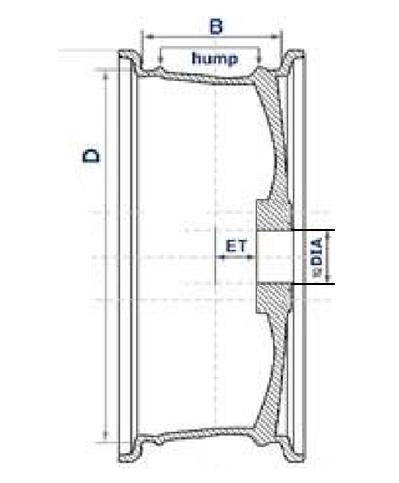
Wheel disk


Please do not open any links and do not make calls (including WhatsApp) to any numbers from messages sent by accounts such as Grabcad Verification, etc. - these are phishing ones. Please do not make any payments. Our security team is currently working on a solution.
