

Learn about the GrabCAD Platform
Get to know GrabCAD as an open software platform for Additive Manufacturing
Visit our new homepage


Project from 3D constructor - https://dubina.biz
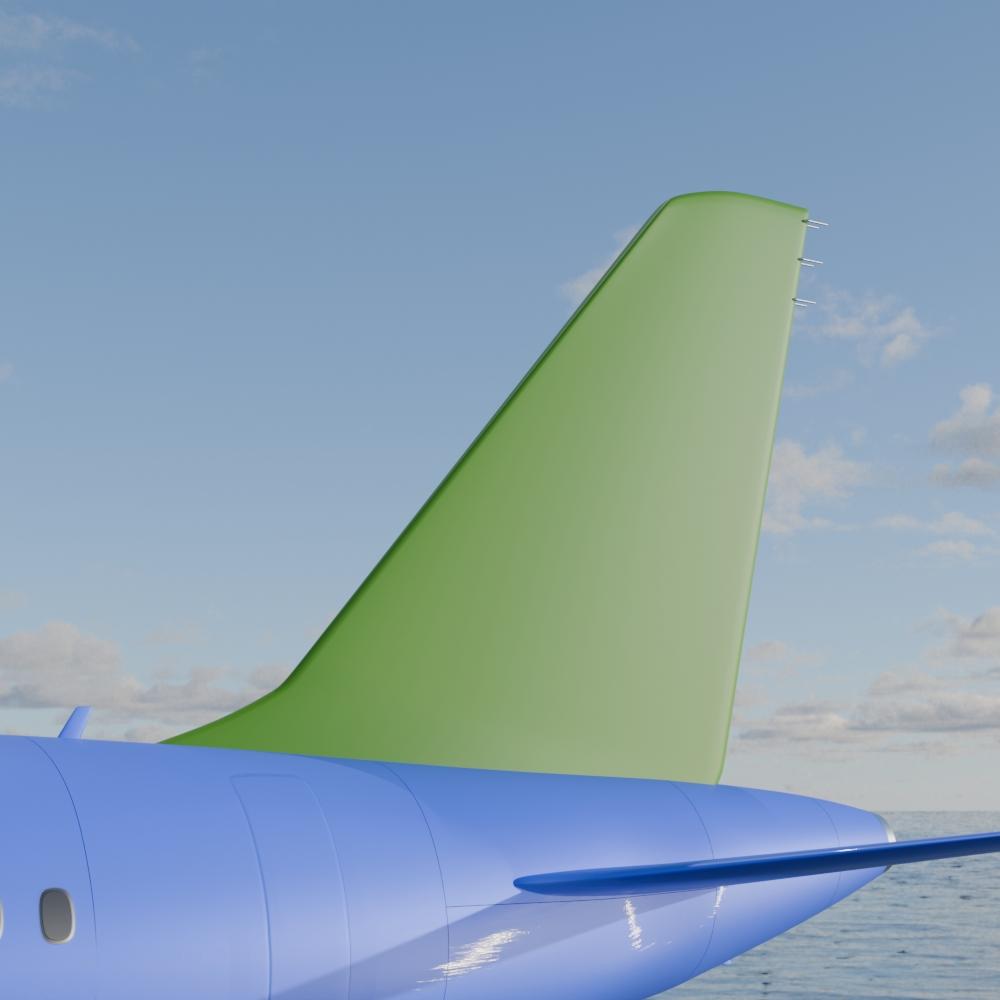
The Dubina A37's rudder is the primary directional control element and is designed to generate a control moment around the aircraft's vertical axis, providing yaw control, coordinating turns, and compensating for thrust asymmetry in the event of engine failure. Located on the vertical stabilizer's trailing edge, it is an aerodynamic surface whose deflection modifies the lateral force on the vertical tail, thereby stabilizing flight direction and maintaining the desired heading. The rudder is controlled via a fly-by-wire system, in which pilot commands from the pedals are processed by computers and transmitted to electrohydraulic actuators, allowing for precise deflection and automatic limitation depending on flight speed and operating mode. This system reduces the risk of structural overload and improves controllability at high speeds, where excessive rudder deflection could otherwise result in high lateral loads. The rudder plays a special role during takeoff and landing, when it is used to compensate for crosswinds, as well as in engine failure situations, where its effectiveness, combined with the large vertical stabilizer arm, ensures safe course maintenance. The rudder design is designed to withstand significant aerodynamic and inertial loads and is constructed using lightweight and durable materials, maintaining the necessary rigidity and service life while minimizing weight. Overall, the rudder is a critical element of the stability and control system, ensuring the aircraft's safe and predictable response to directional disturbances during all phases of flight.


Please do not open any links and do not make calls (including WhatsApp) to any numbers from messages sent by accounts such as Grabcad Verification, etc. - these are phishing ones. Please do not make any payments. Our security team is currently working on a solution.