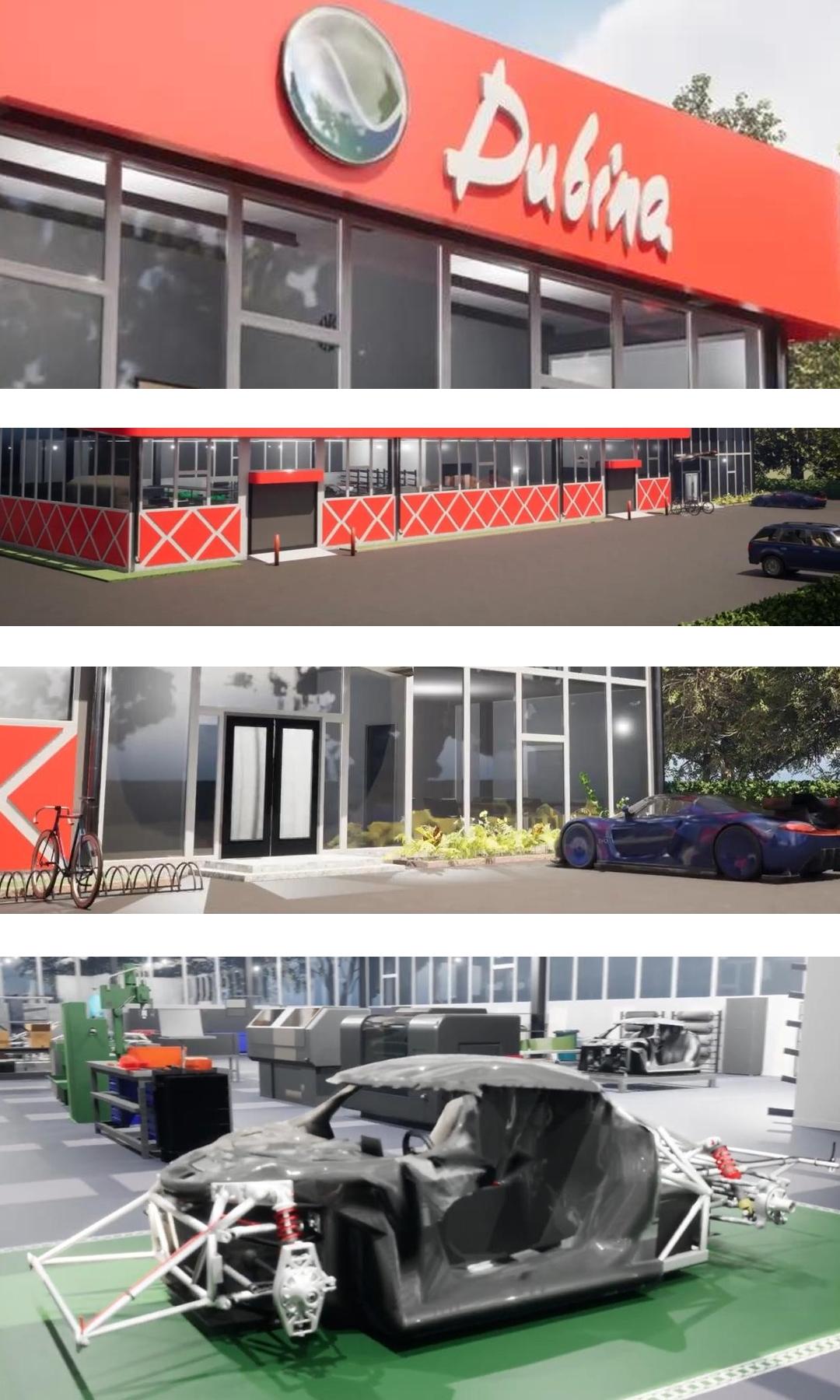
Project from 3D constructor -Β https://dubina.biz

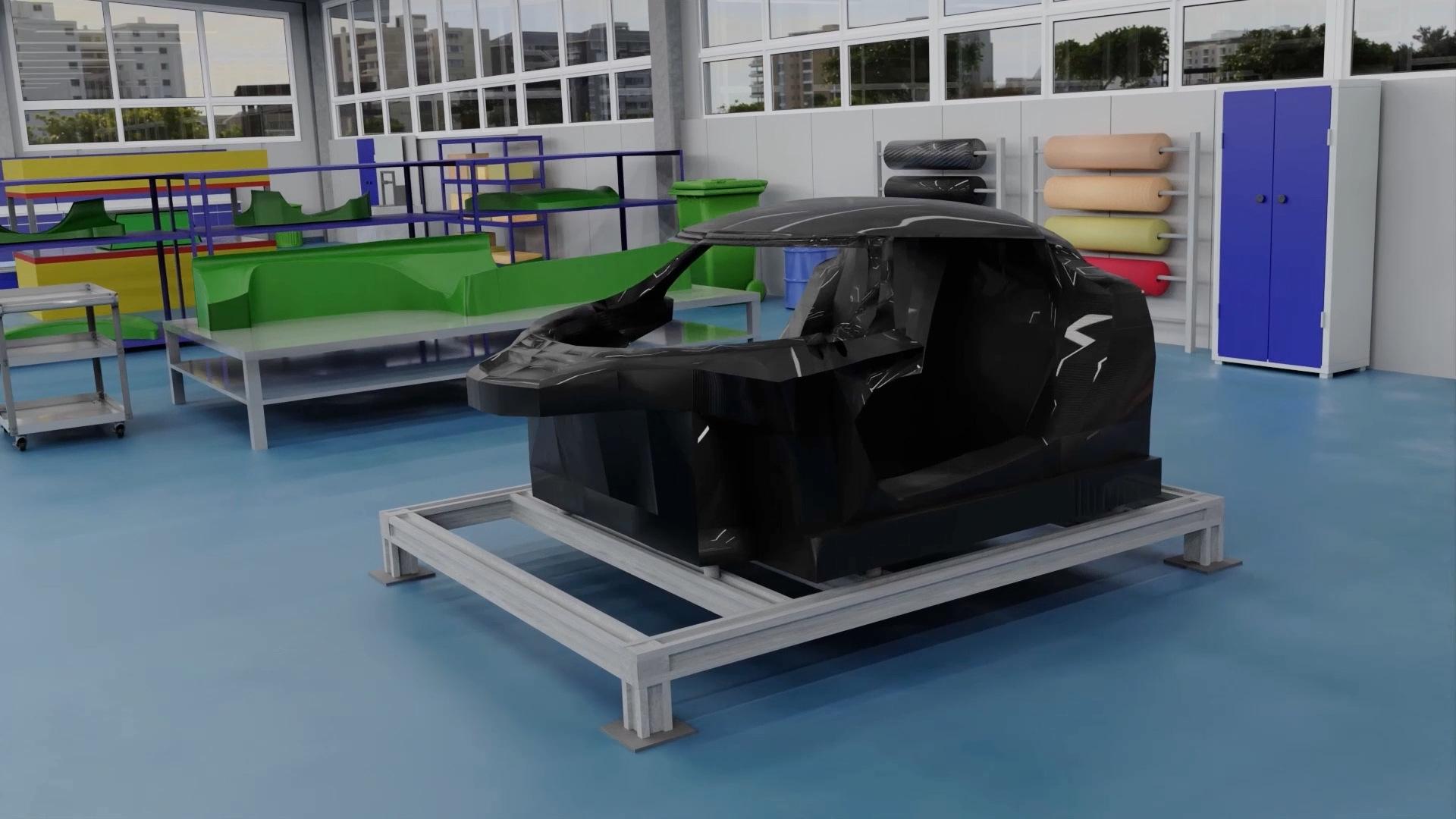
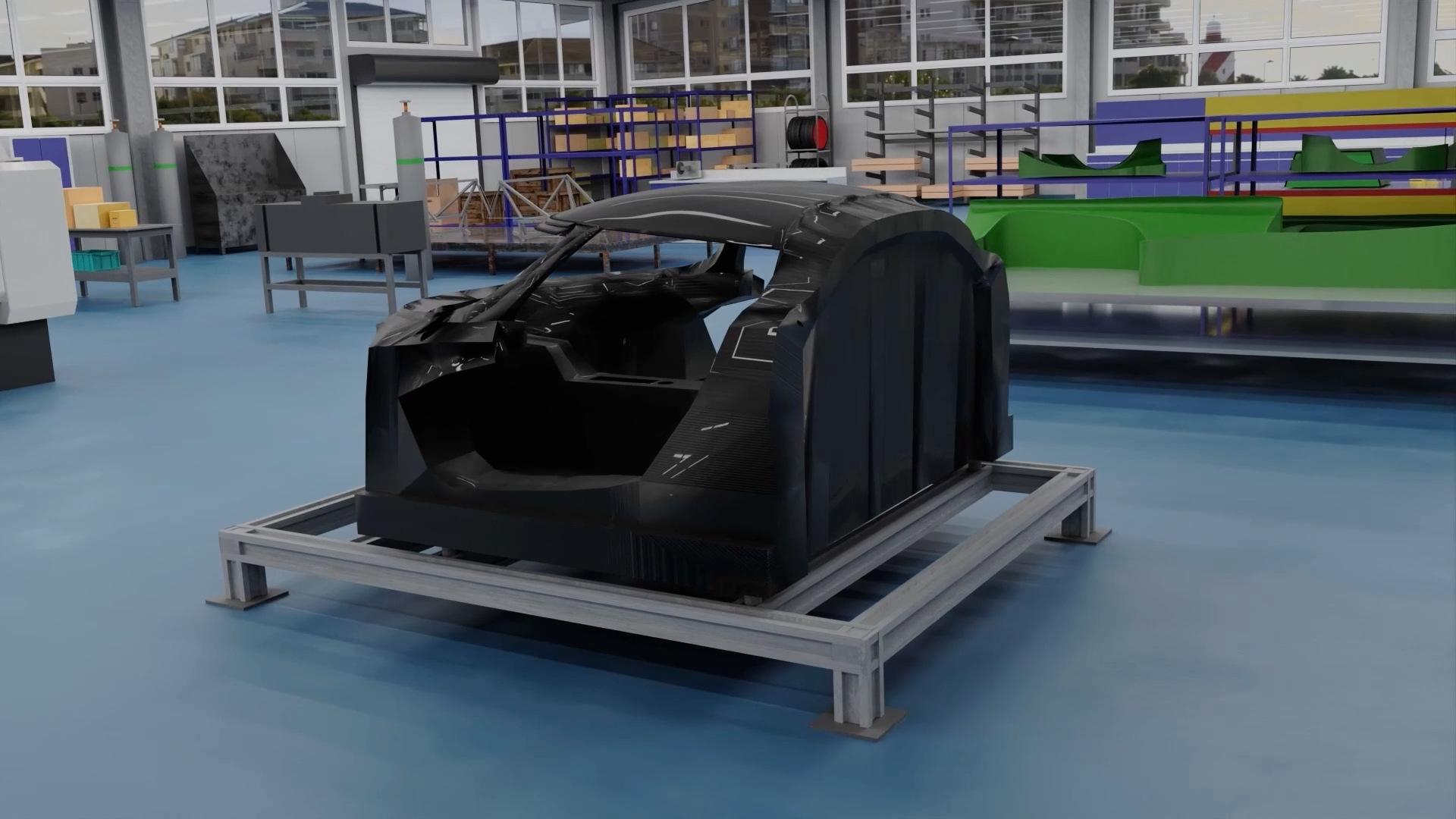
The factory was designed for small-scale production. This is the company's first plant where the production of a car is planned. The factory includes a production line consisting of three stages. The total area of ββthe plant is 1,500 m. The first stage of the production line involves the assembly of the monocoque. The composite material from which the body parts are made is cut. The composite cut on the table is placed in the part matrix. The part matrix enters the molding room. The cutting process takes less time than the molding process, so two molding halls N1 and N2 are used in the production process. During molding, carbon fiber prepreg is placed into a mold for the part and then fed into ovens for polymerization. After polymerization in the oven, the matrix with the part is sent to the mechanical processing shops for the removal of the part from the matrix and mechanical processing, during which the flash is removed from the part and technological holes are made. After mechanical processing, the part is sent to the finished parts warehouse Q or to the assembly area R if it is part of another part. All body parts are assembled at the first stage of production. After the assembly process at the first stage, the body is sent to the paint and drying chamber at the second stage of production. Painting a car body is a long and complicated procedure consisting of several stages. The first stage of body sanding requires excellent ventilation, which should not only remove dust from the paint booth, but also filter the air entering the booth. After the paint is applied, hot air is supplied to the chamber to dry it. After painting, the car body parts go to the third, final stage of production. Two workers install all the car equipment in a certain order and mount the electrical wiring. The assemblers equip the body with a power unit assembled in section 1, a battery assembled in section 3, and a dashboard assembled in section 6. After installing the parts, the workers check the operation of all the car's systems, and after that the car is ready to pass into the hands of its owner.
Factory construct
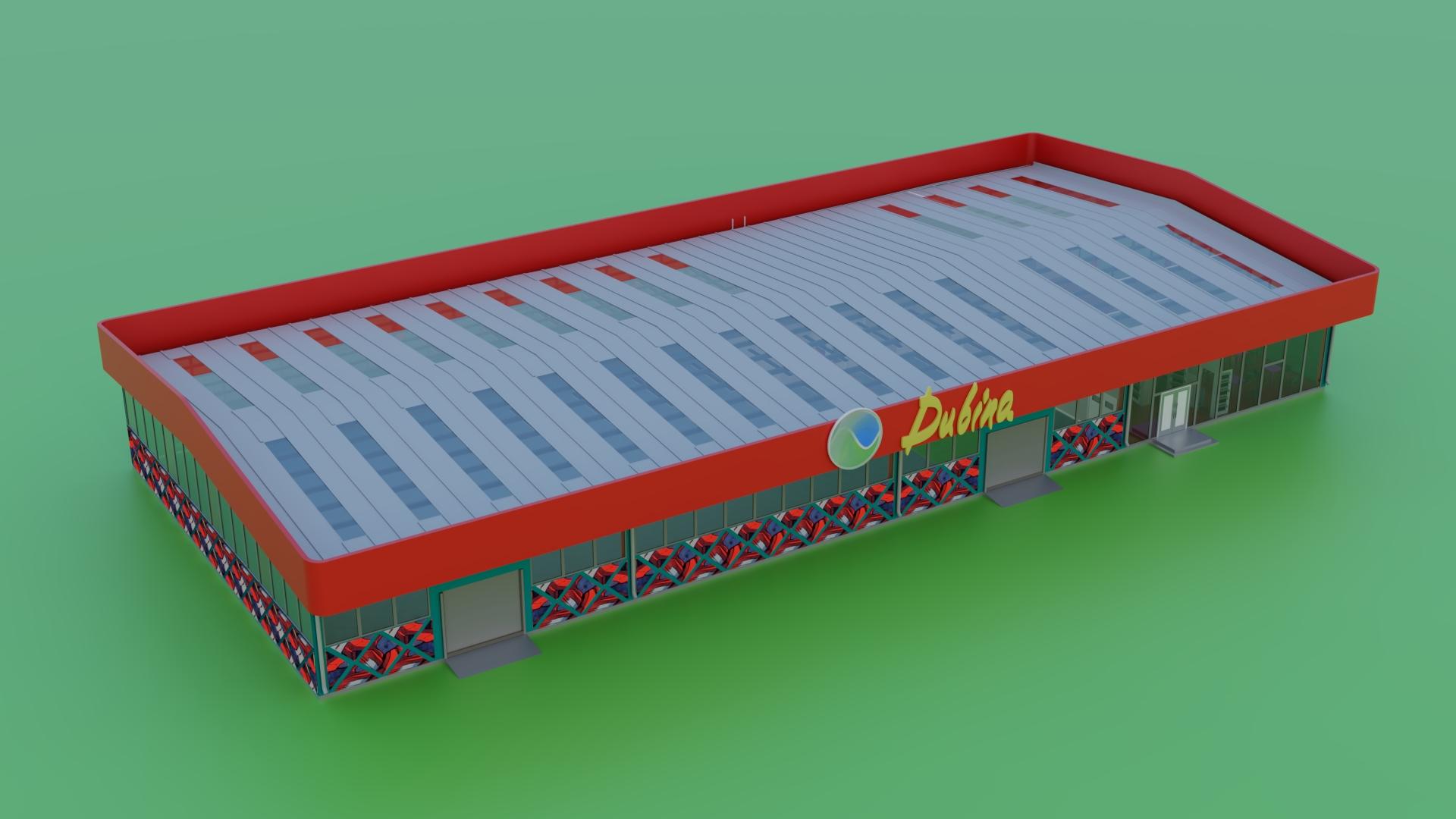
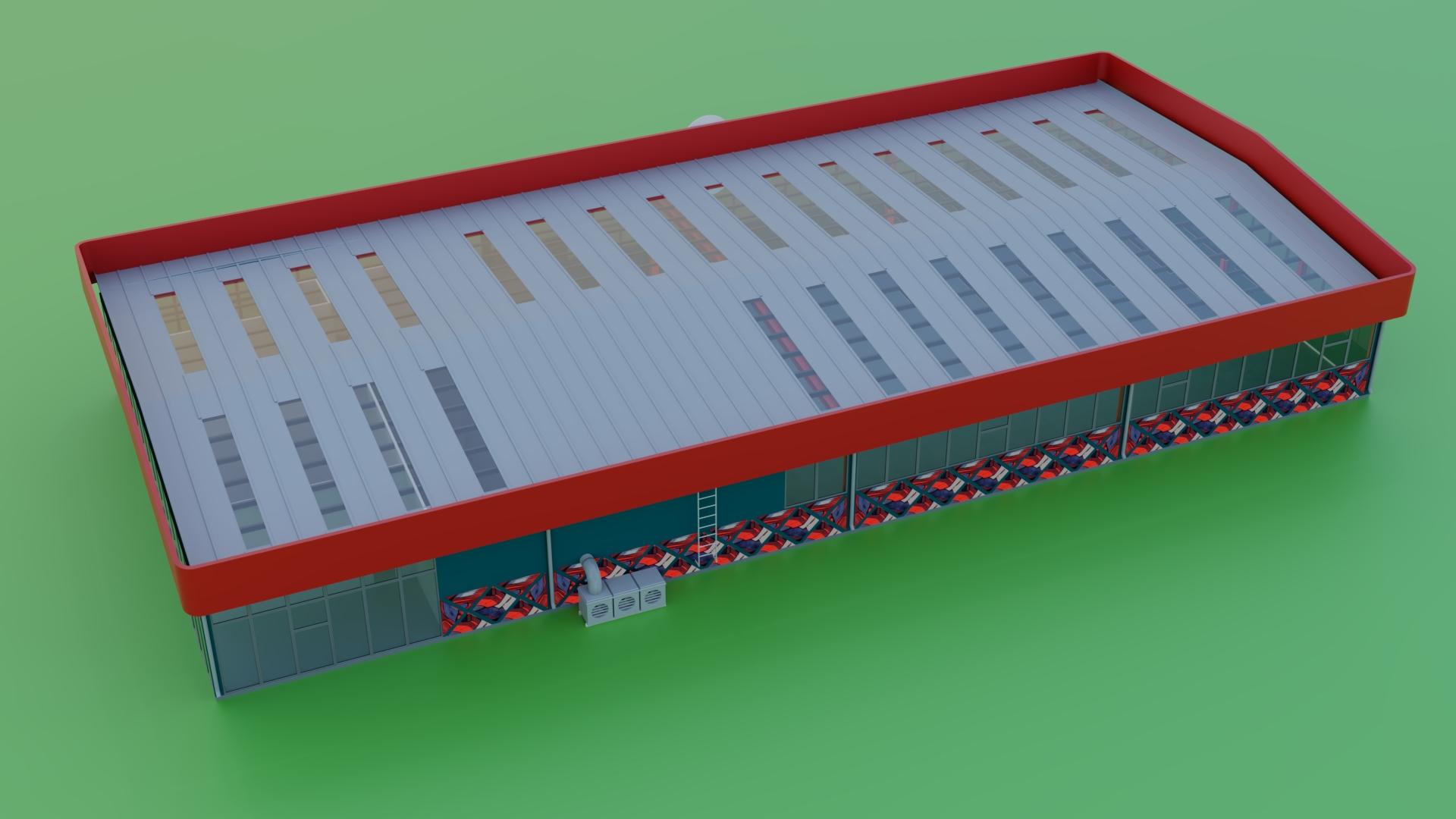
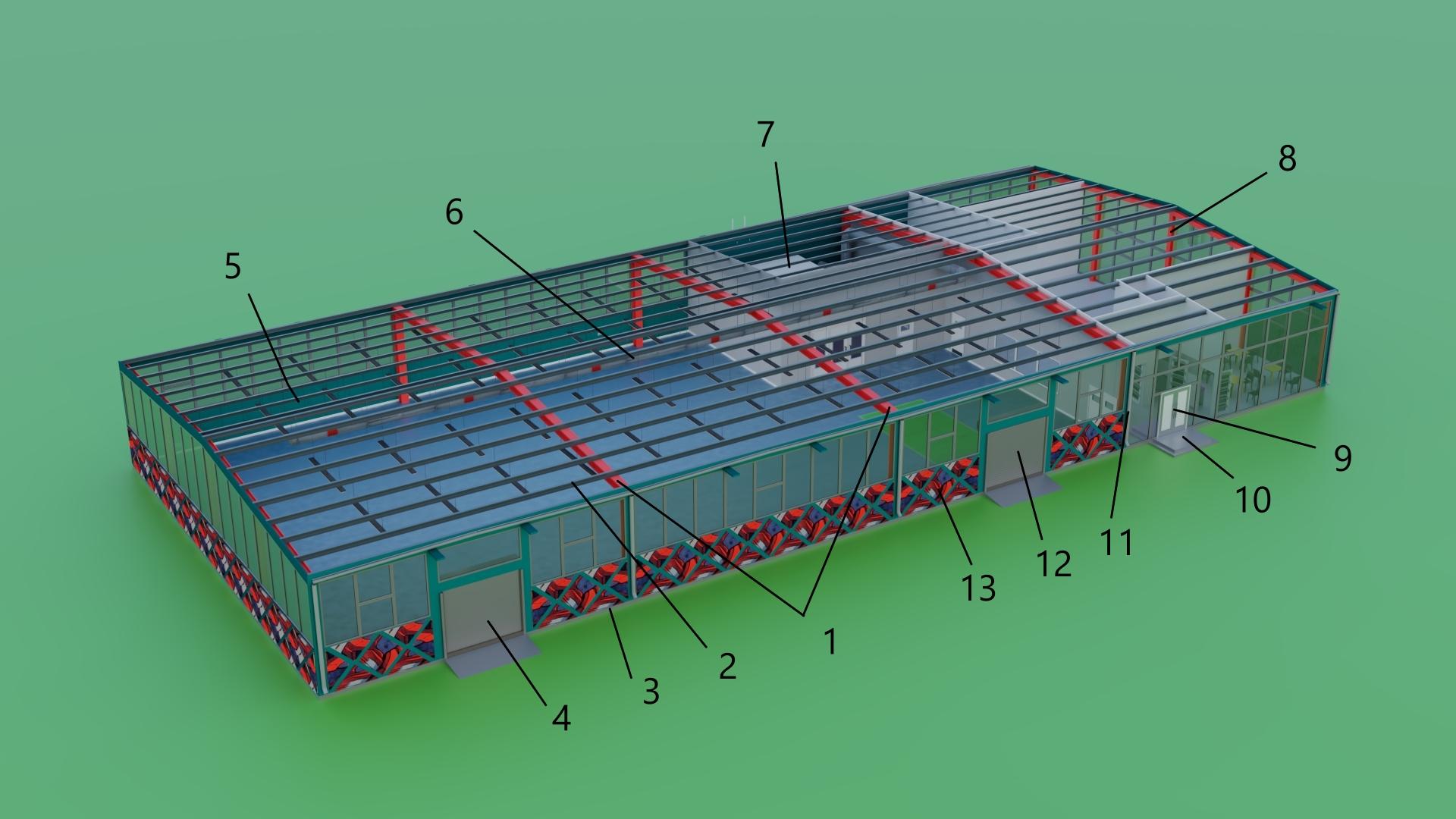
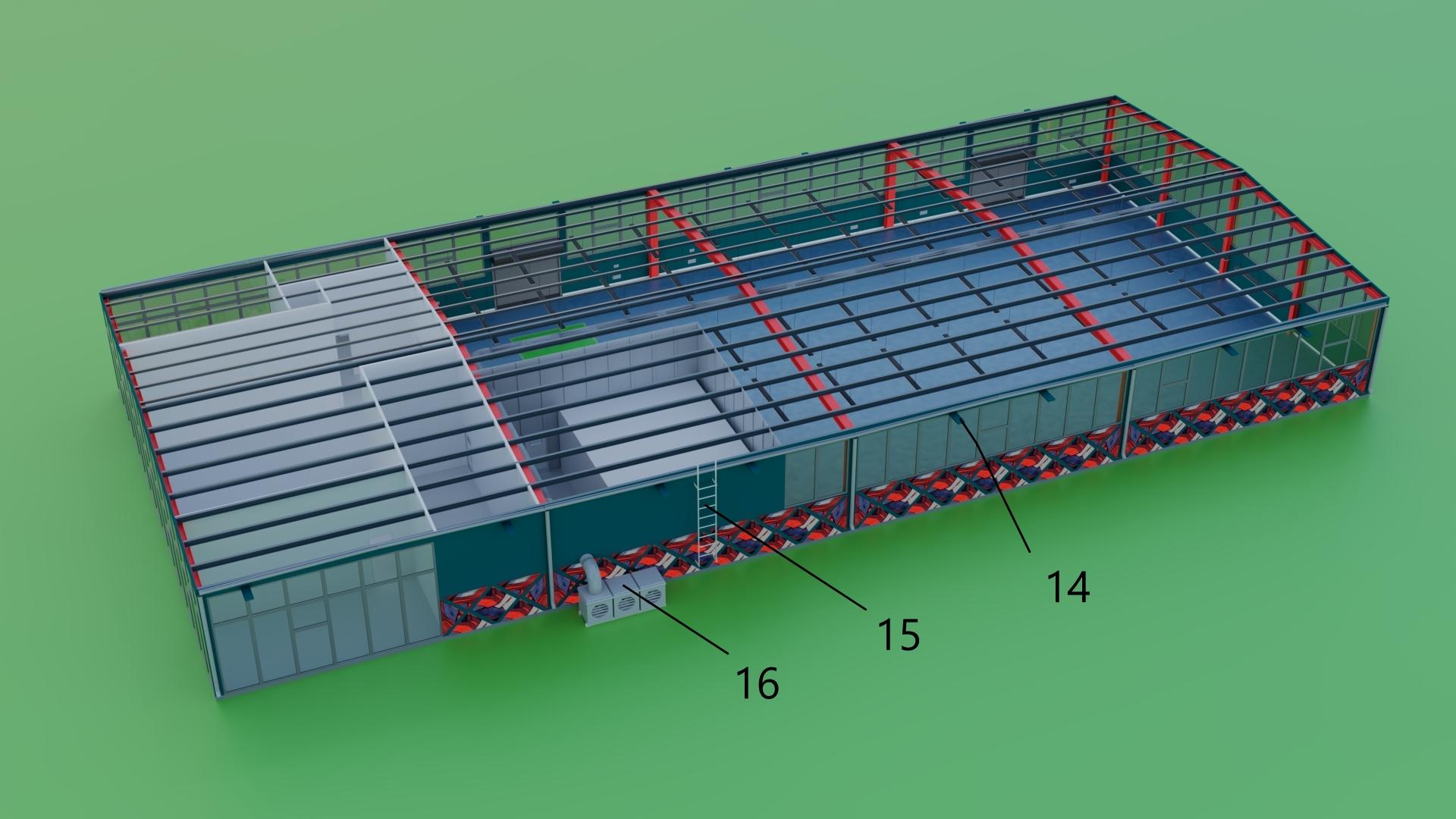
1 β Column; 2 - Roof purlin; 3 β Foundation; 4 β Factory exit; 5 - Ventilation grille in the wall; 6 - Ventilation duct; 7 - Paint booth; 8 - Crossbar; 9 - Entrance; 10 - Porch; 11 - Gutter; 12 - Factory exit; 13 - Wall; 14 - Cornice bracket; 15 - Stairs; 16 - Split system.
1 β Frame
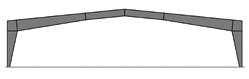
The load-bearing frame of the plant building is a steel frame of variable cross-section, consisting of columns and beams, as well as a system of wall and roof purlins. The load from the building frame is transferred to the building foundation through the framework frame. The frame of the framework consists of welded I-beams of variable cross-section. The frame column is made of steel I-beam of variable cross-section by electric welding. The width of the column is 20 meters. The smallest height of the column from the floor is 4 meters. The roof slope is 4Β°.

The framework of the building frame has a rigid connection to the foundation. Rigid support of the columns ensures the transfer of transverse and bending moments, creating a stable structure. The column base is designed to evenly distribute concentrated pressure from the column to the foundation surface and ensures that the lower end of the column is fixed in accordance with the established design scheme.
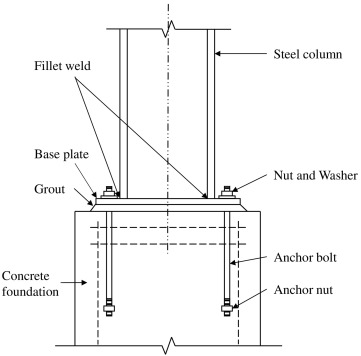
The steel column is attached to the foundation using anchor bolts and a support plate. The anchor bolts serve to fix the position of the column and transfer the tensile forces arising from bending moments to the foundation. The support plate, made of steel measuring 500 x 500 x 20 mm, is welded to the base of the column, distributes the load from the column over a large area of the foundation, preventing point impact.
2 β Roof
The roof purlins of a building are horizontal beams that are part of the metal structure of the roof and serve to distribute the load from the roof to the columns. They provide strength and stability to the roof and are also used to attach lighting fixtures and the ventilation duct.
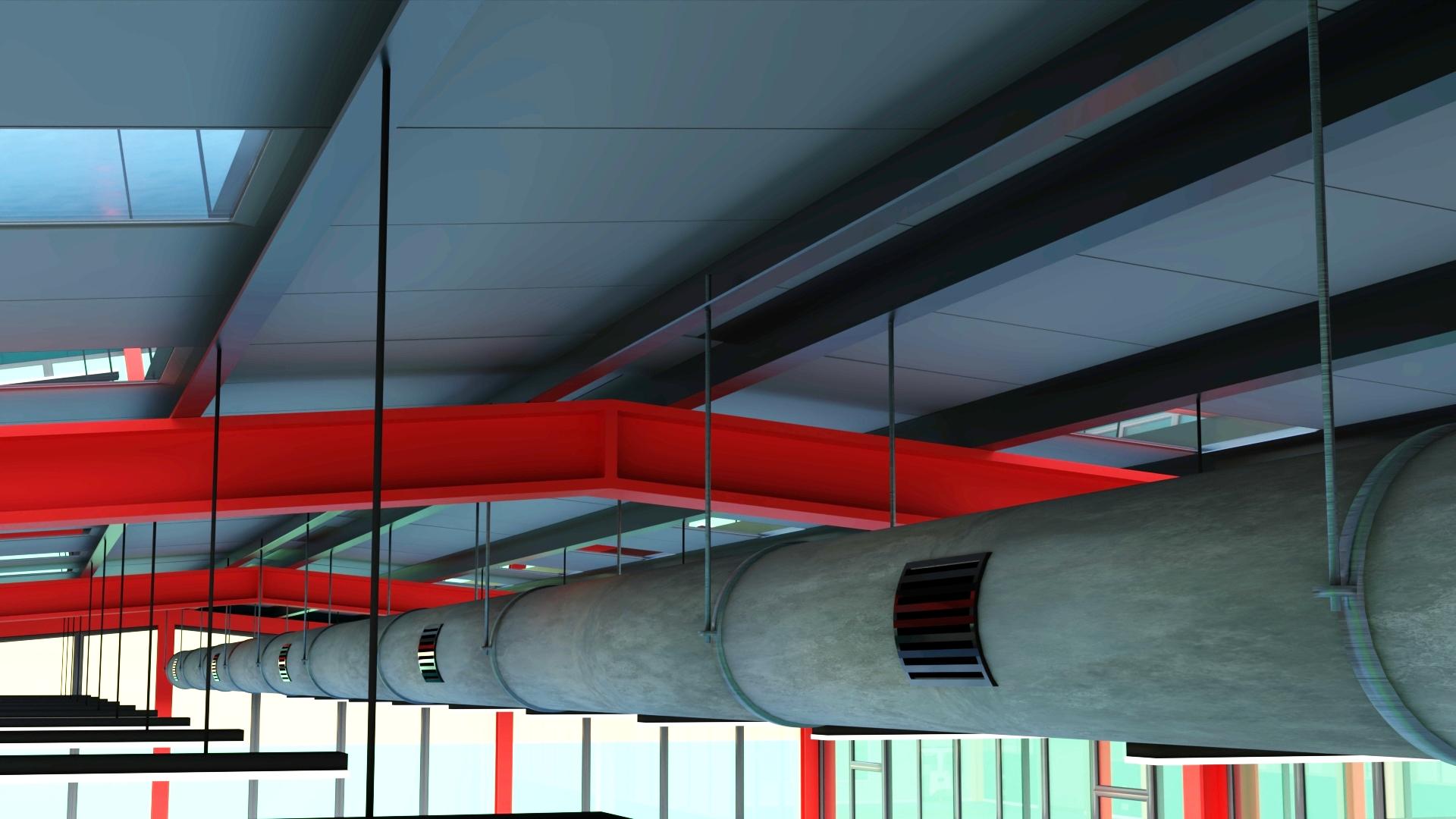
Roof purlins
3 - Walls
Wall purlins are horizontal beams used to support wall panels, sheathing, and windows. Wall purlins distribute loads across the building frame. They are an important element of the building frame and are made of steel.
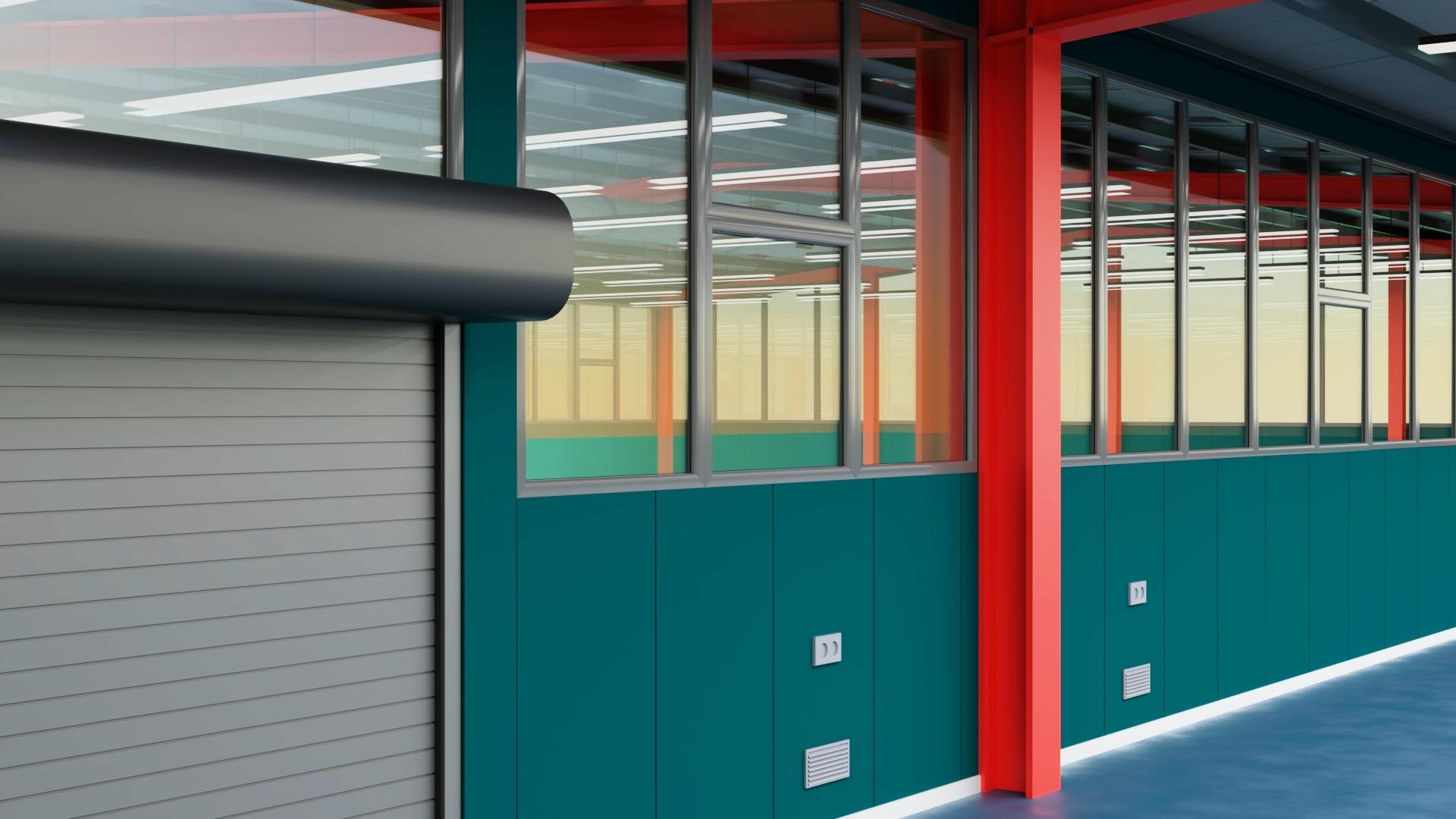
Wall purlins
Wall and roof purlins are made of cold-formed galvanized Z-profiles. Installation is carried out using galvanized bolts. Openings are made of galvanized cold-formed L-, C-, U- and Z-profiles. All elements of the supporting frame are shot-blasted and coated with a primer with a coating thickness of 80 microns to protect against corrosion during transportation and installation.
4 - Floor
A structural element buried below the ground surface that bears the loads from the building and transfers them to the base is called a foundation. The plant has a columnar foundation with a grillage and a floor on the ground. The soil at the foundation site is loam and semi-solid clay. The bearing capacity of the soil under the base of the columnar foundation is 200 kPa (1.5β2.0 kg/cmΒ²). The soil can withstand loads from columns and grillages and transfers them evenly without excessive settlement. Reinforced concrete grillage, monolithic, 700 mm high, 500 mm wide, made at floor level. The floor is independent from the grillage. The floor on the ground is not rigidly connected to the grillage, but is separated by a compensation joint, a strip of 20 mm thick PSB foam plastic. The foundation settlement is not transferred to the floor. The grillage and columnar foundations take the load from the columns and frame. The floor takes the load from the equipment and loading transport. The floor consists of a compacted sand and crushed stone base 400 mm thick. Then a 100 mm thick sub-concrete base of B7.5 is laid on it, then a waterproofing membrane is laid, then a screed of B22.5 concrete reinforced with A500C Γ10 welded mesh is laid with a pitch of 200Γ200 mm. The upper and lower mesh zones are on supports. The thickness of the screed is 150 mm.
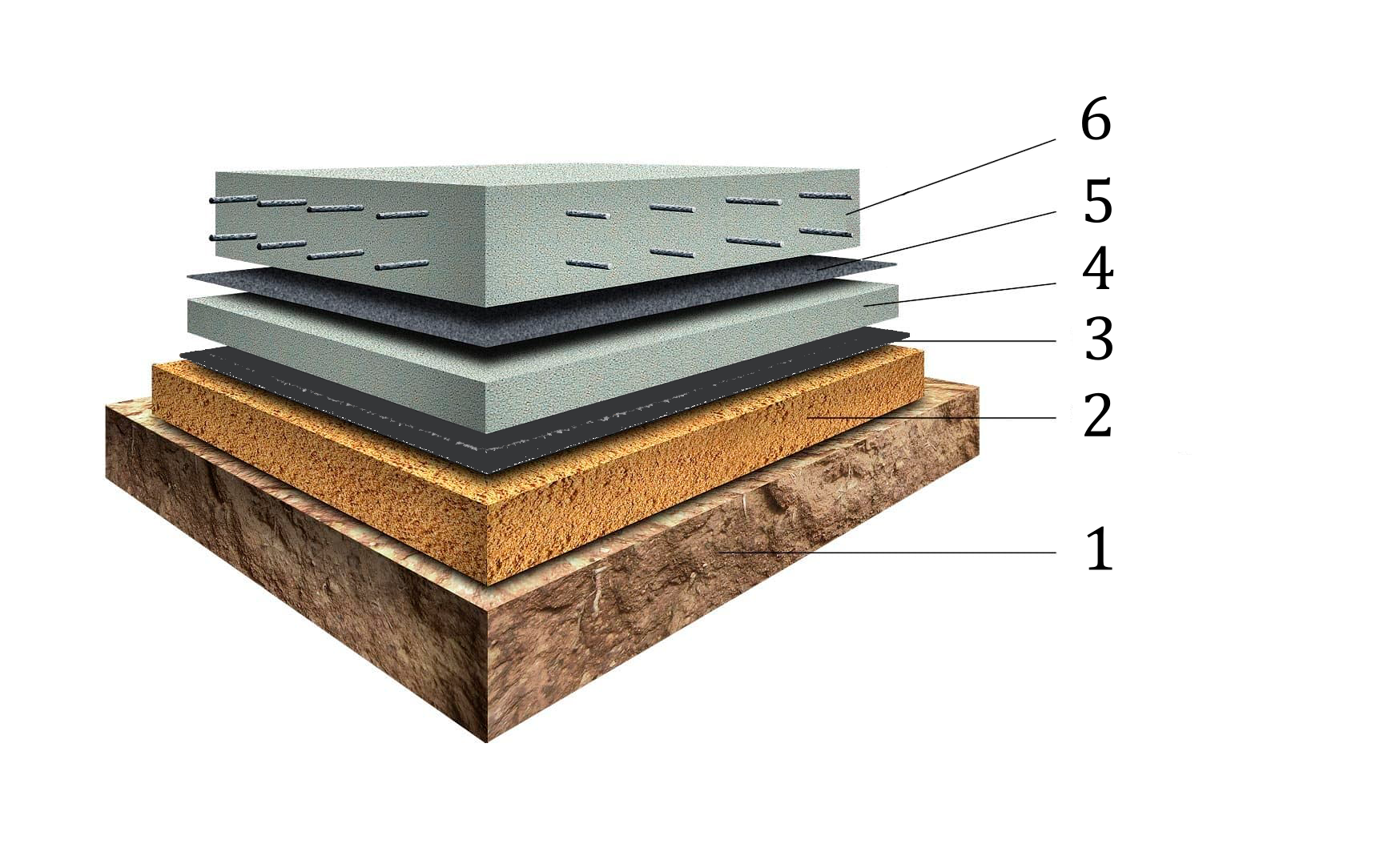
1-Soil; 2-Sand; 3-Crushed stone; 4-Concrete base; 5-Waterproofing; 6-Screed
Figure.- Floor of the building
The concrete base is an intermediate layer between the compacted base and the screed. The base for the screed is designed to protect against groundwater and to additionally distribute pressure on the soil. For the concrete base, B7.5 concrete with a low rigidity class is used, since it is not so demanding on the strength of the layer. In this case, the base performs the following functions: prevents mortar leaks into the soil, which ensures the required strength properties of concrete in the monolithic floor screed; levels the site and ensures ease of installation of the reinforcement frame and installation of the monolithic screed; serves as an additional shock absorber for minor soil deformations, thereby protecting the base structure. A topping is applied to the surface of the floor screed to create a super-strong, wear-resistant and sealed finishing layer. The finishing coating for the floor is a polyurethane coating, due to its strength, chemical resistance and ease of maintenance. This is a seamless polymer coating created on the basis of polyurethane resins. It forms a dense, slightly rough surface with high wear resistance with multi-colored markings. Polyurethane coating has: high strength, wear resistance; resistant to impacts, abrasive loads; resistance to chemicals (oils, fuels and lubricants, weak acids, alkalis); elasticity (does not crack with vibration and temperature fluctuations, unlike epoxy coating); seamless and tight (no cracks where dirt accumulates); durability (10-15 years under normal use). Total coating thickness: 3 mm.
Factory layout
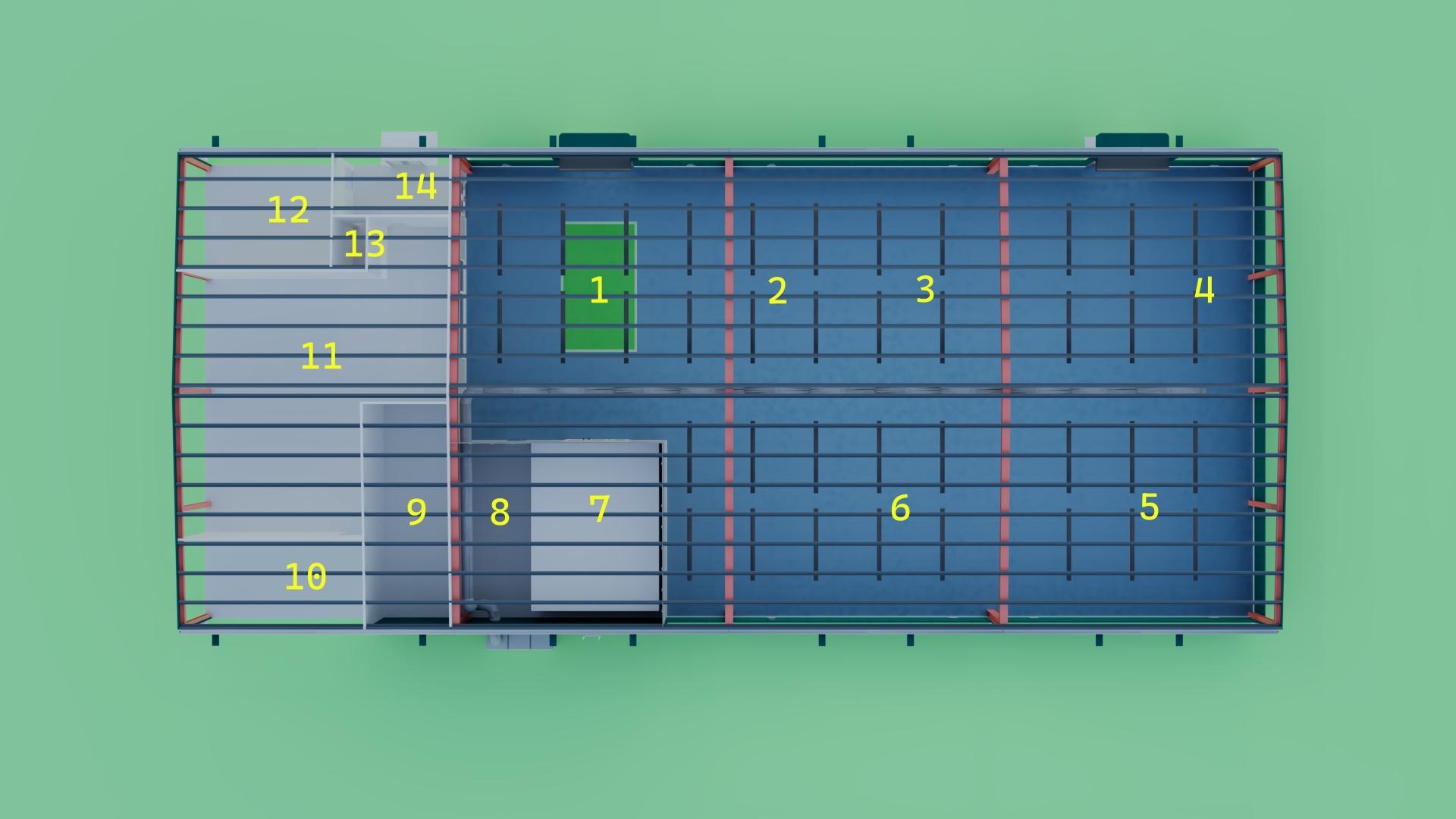
1 β Assembly area; 2 β CNC machine section; 3 β Battery assembly section; 4 β Warehouse; 5 β Welding section; 6 β Molding section; 7 β Paint booth; 8 β Paint booth equipment room; 9 β Locker room; 10 β Anton Dubina office; 11 β Engineersβ room; 12 β Canteen; 13 β Toile; 14 β Hallway.
1. Assembly areaο»Ώ


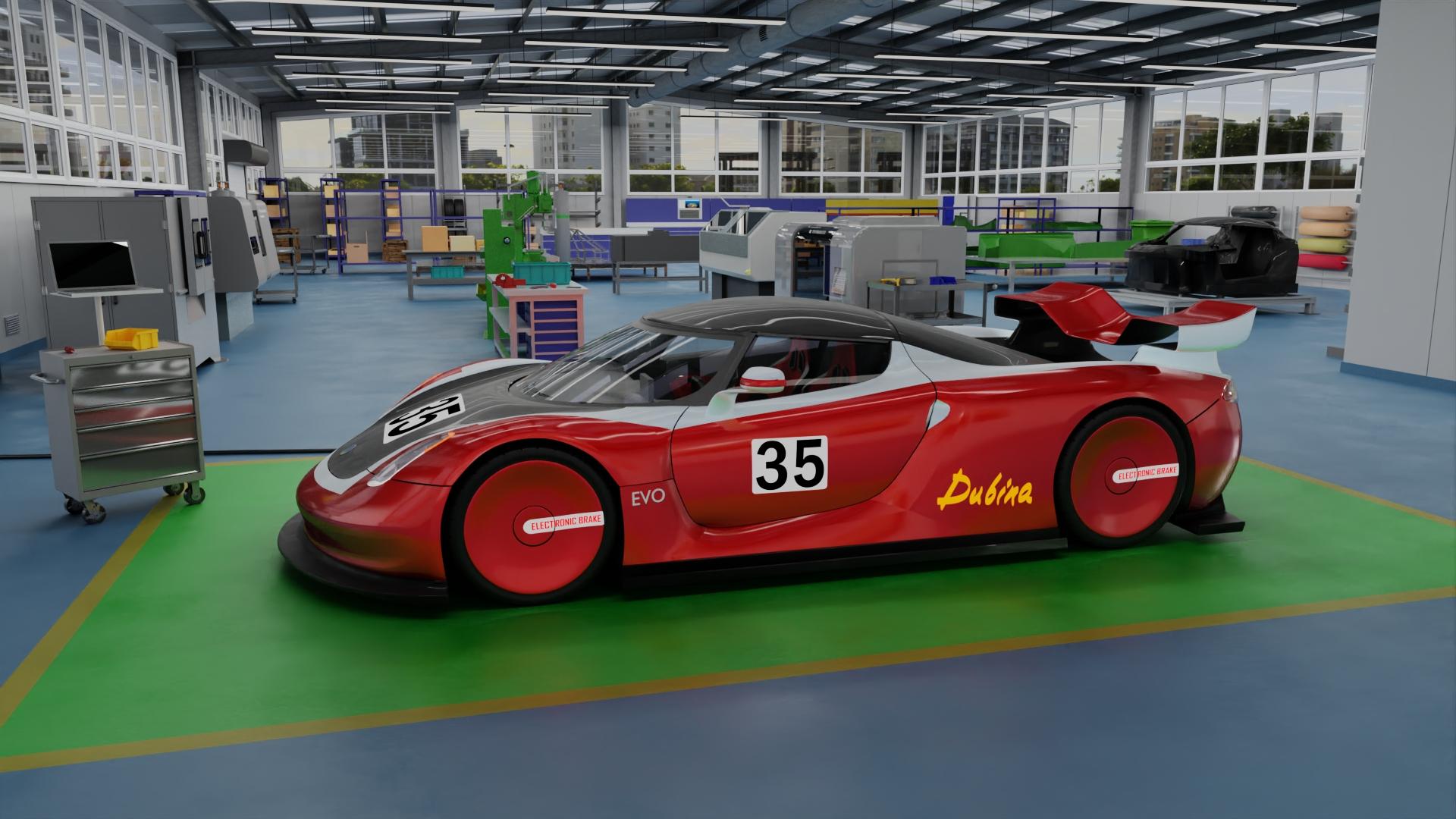
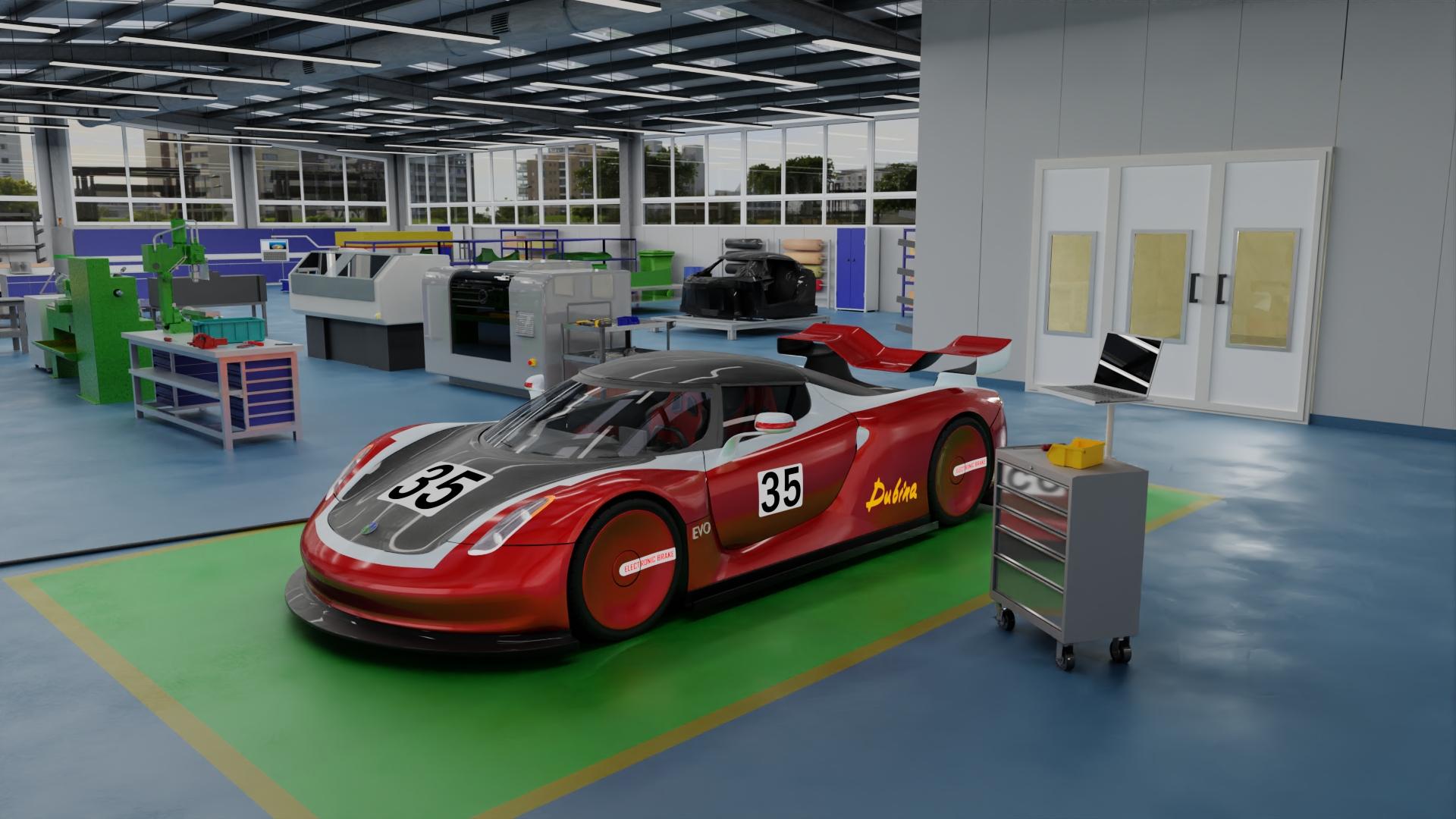
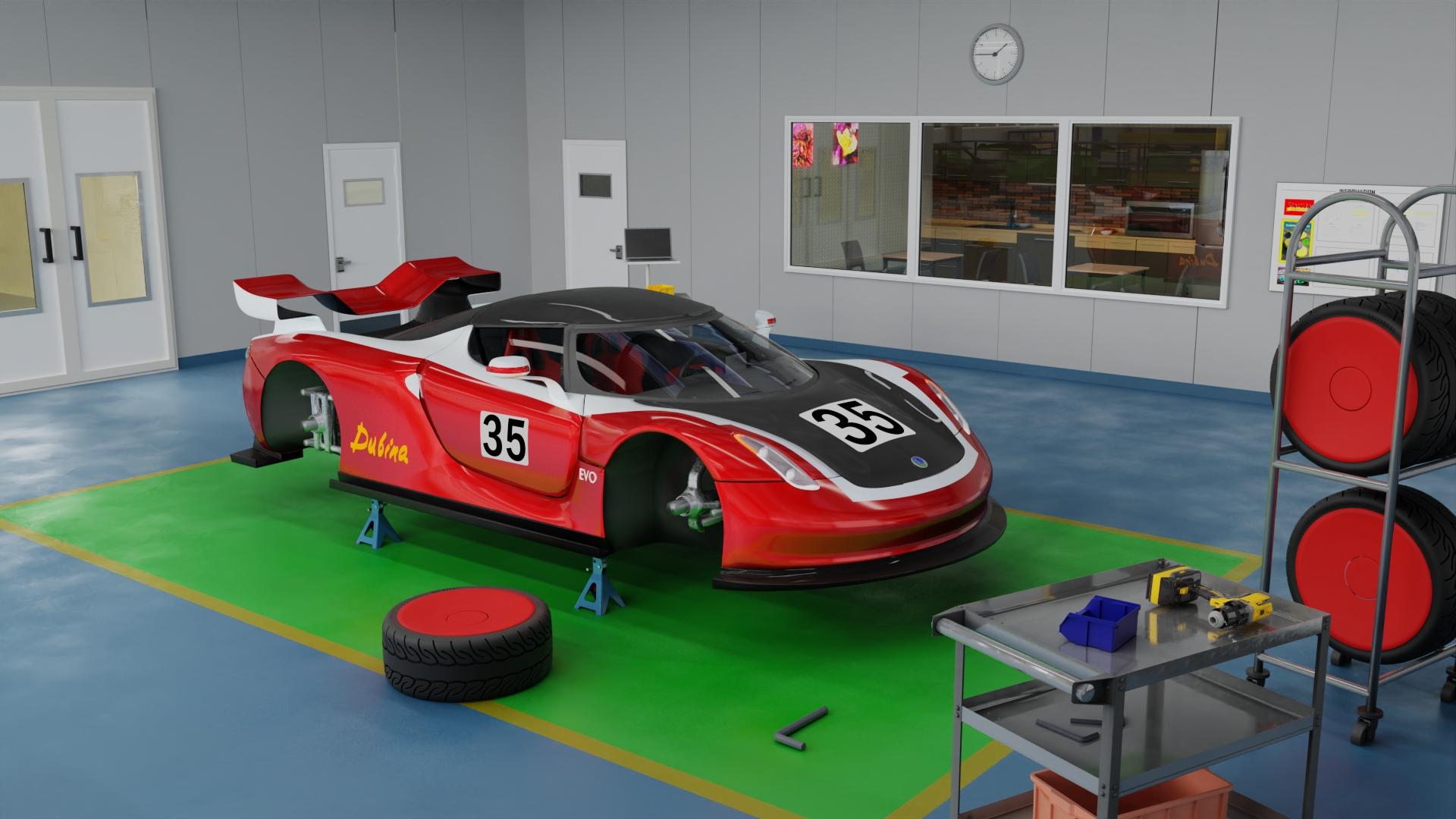
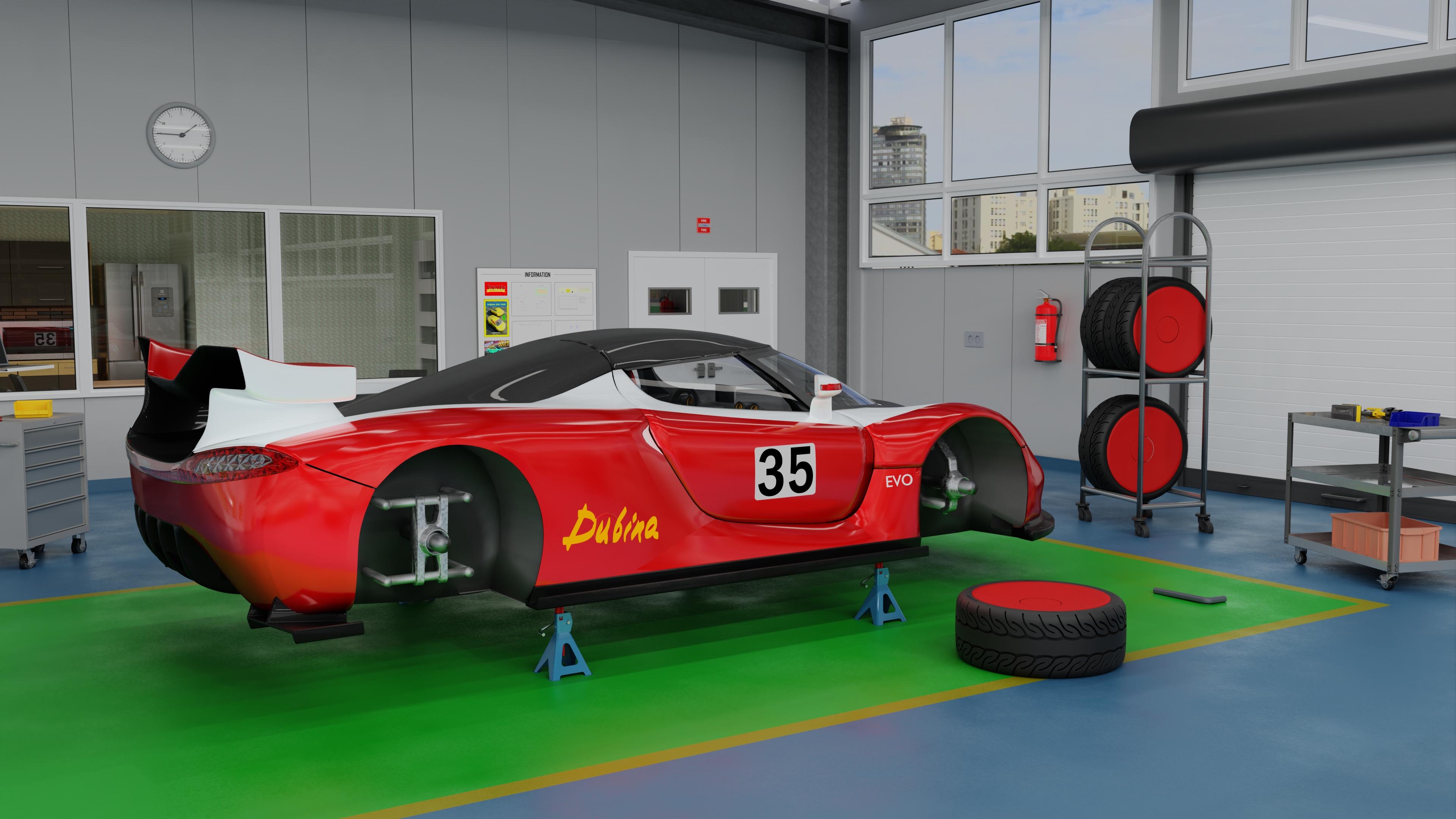
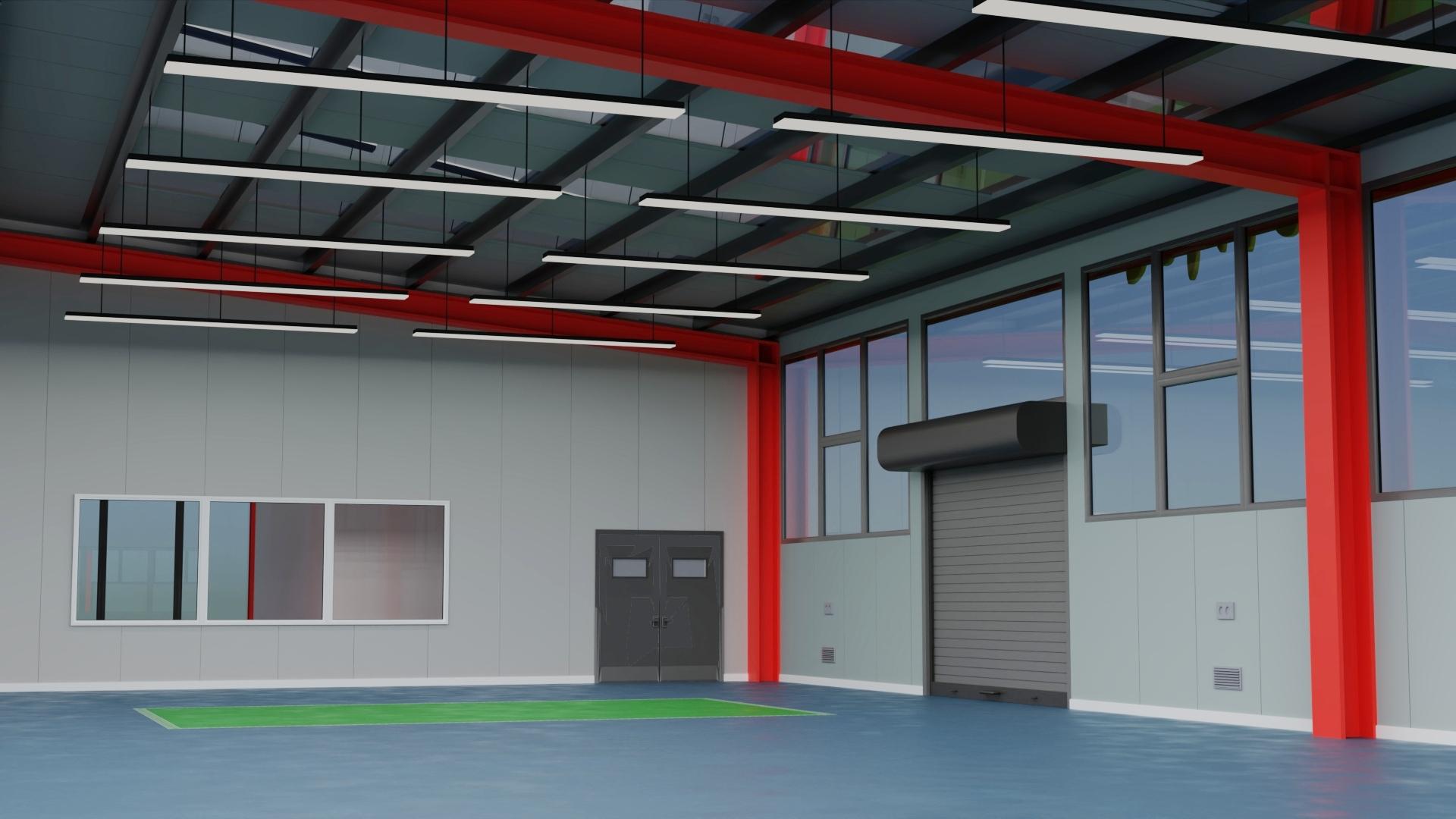
The assembly area is located in front of the entrance to the production area, in front of the exit gates and in front of the paint booth gates. This arrangement is due to the fact that the car is assembled in one place after all the parts and assemblies have been manufactured. The assembly area does not intersect with other production processes. If necessary, the entire car is sent to the paint booth for painting, grinding, washing and drying. The assembly area is marked on the floor of the building in green with a yellow frame. This marking facilitates the positioning of the car for assembly, and the yellow frame indicates the boundary within which equipment and tools that interfere with the assembly process must not be left. The wall between the assembly area and the engineers' hall has a window. The window visually increases the space of the room, and the production process can also be observed through the window, which improves the assembly process. The distance from the boundary of the allocated assembly area to the walls and equipment is such that transport trolleys with large parts can pass freely without interfering with workers performing assembly.
2 β CNC machine section


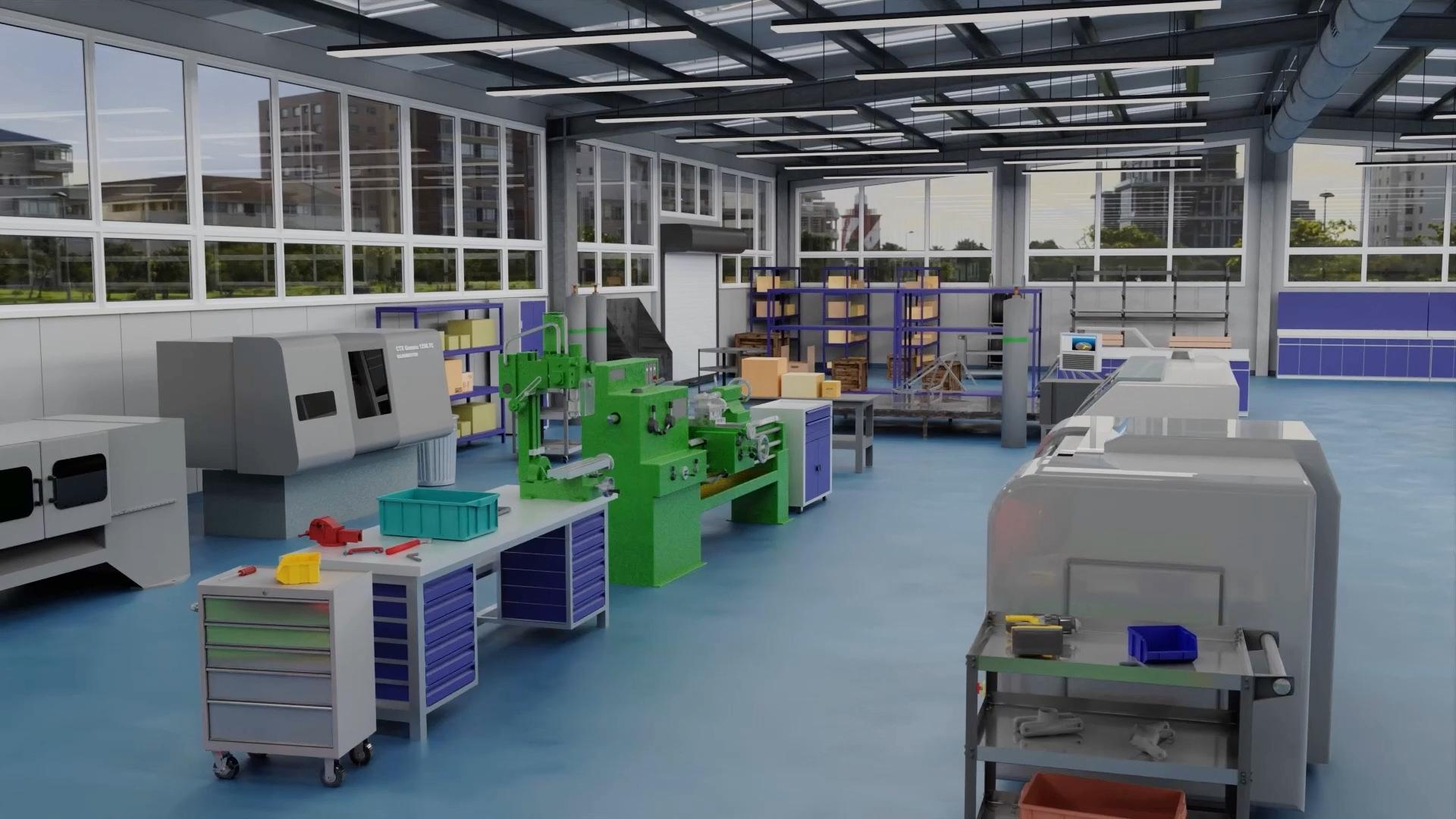
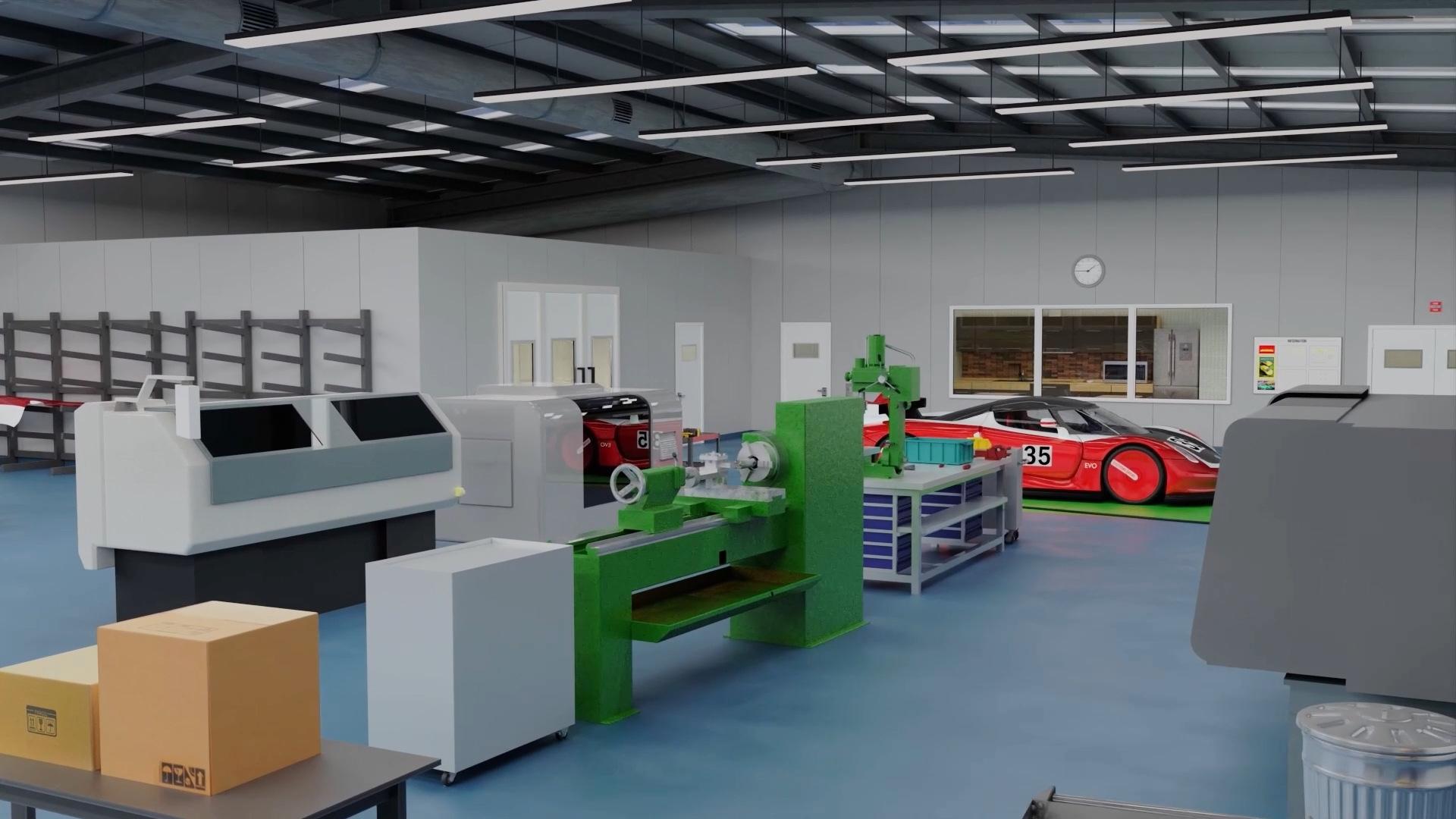
The section is located near the vehicle assembly area, which is due to the need for prompt production and refinement of parts. This solution corresponds to the concept of small-scale production, where flexibility and the ability to quickly adapt to design changes are important. The section has a milling, turning and multi-axis processing machine, as well as a 3D printer that prints metal. They manufacture engine and suspension parts. The parts are moved from the machines on trolleys directly to the assembly site. There are passages between the machines for transporting large-sized elements. The section has a workbench, which is also a measuring post with control tools, which ensures the accuracy of all parts before they are received for assembly. If during the assembly process it is revealed that a change is needed to a part, the engineers promptly transfer the adjustment to the CNC section, and after a short time the new version is sent to the assemblers.
3 β Battery assembly section
ο»Ώ
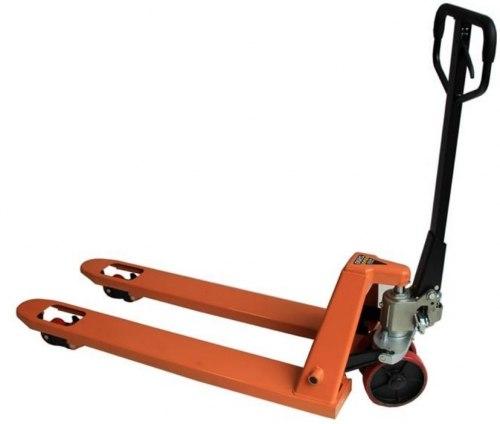
The battery is assembled on a special stand located in the center of section 3. The carbon fiber battery case comes from molding section 6, battery cells come from warehouse 4. The cells are placed in the case and connected to each other. After assembly, testing and charging, the finished battery goes to assembly section 1. The battery moves from battery assembly section 3 to vehicle assembly section 1 on a hydraulic trolley. The trolley drives up to the slipway on which the battery is assembled, lifts the battery, and rolls it to the vehicle being assembled. The slipway has a passage so that the trolley can exit with the battery. The trolley drives up to the slipway, rises, removes the battery from the slipway and moves it to the vehicle body for installation. The slipway is made of steel angles and square pipes.
Battery assembly stand.
Hydraulic trolley with lifting function for installing battery, motor.
4 - Warehouse
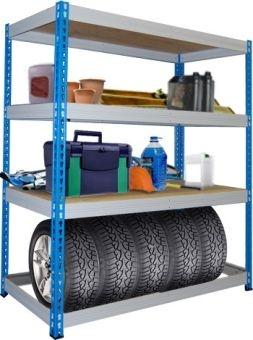
The warehouse is located at the end of the workshop at the gate of the building. The warehouse is the beginning of the entire production, from it parts and materials are delivered to different production areas. The warehouse contains racks, profiles, rolled materials, barrels, canisters, jars. They store parts, paints, blanks for production. Materials and parts are moved from the warehouse to production areas on special carts. The position of storekeeper is performed by a junior technologist.
5 β Welding section
The welding section is the most productive, producing the vehicle frame, engine mounts, and suspension arms. Electric welding is performed in an inert gas environment. In addition to vehicle parts, fixtures, jigs, and racks are manufactured in the welding section. The section is located adjacent to the warehouse for quick transfer of metal profiles, gas cylinders, and consumables from there to the welding section. The section has separate ventilation above the welding jig. Two welders work in the section.
6 β Molding section


The molding process is the most labor-intensive. Fiberglass, epoxy resin, and dust from machining can all end up on car parts. To prevent this, sanding and finishing are performed in a paint booth. The molder takes the part's mold from the rack and places it on the molding table. Part production begins with cutting the prepreg. The worker cuts the prepreg for the future part according to the pattern and places the cut material in a plastic container. The material then moves to the molding area. The molder places the material in the mold, covers it with a lid, and sends it to the polymerization area. There, the part polymerizes and hardens. The mold is then sent back to the molding table for removal from the mold. After removal, the part is sent for machining, and the mold is stored in the mold storage area. Parts requiring preassembly, such as a car monocoque, are assembled in the preassembly area.
7 β Paint booth

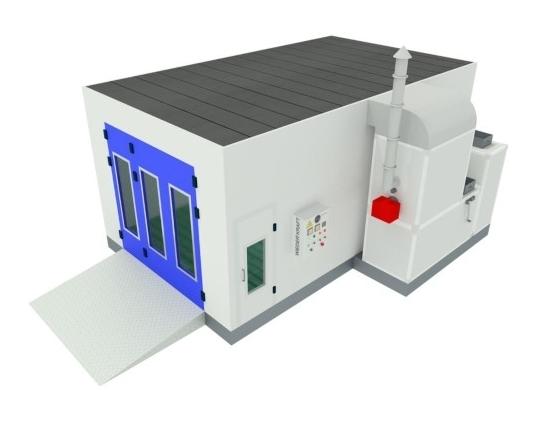
Full body painting of a car is a lengthy and complex process, consisting of several stages carried out in a specially designed booth. During the initial preparatory work involving body sanding, the ventilation system plays a crucial role. It must not only remove dust within the paint booth but also filter the outside air entering the room. The purpose of ventilation during car body painting is to precipitate suspended paint particles and remove them from the booth. The pressure in the booth is higher than the outside pressure. To prevent dust from escaping from the booth and from falling on the painted parts, the internal fan is rated at 2 kW, and the external fan is rated at 1 kW. During the final stage, while the vehicle body is drying, the filtered air is heated to 60Β°C and circulated within the booth. The paint booth is equipped with a good ventilation system, high ambient light levels, and reliable dust insulation. Painting of body parts such as the hood, trunk lid, sills, and bumpers is done separately from painting of the main body. After painting, these parts are placed on racks on the left side of the assembly area.
8Β β Paint booth equipment room.
The spray booth equipment room is located to the right of the booth. This is a process room designed to house tools, booth clothing, painting and sanding equipment, and ventilation and drying controls. The room is equipped with racks and brackets for storing tools, nozzles, hoses, and painting equipment components. The room is separated from the main booth by a sealed partition with an insulated door, providing convenient access for personnel and preventing solvent vapors and dust from entering the booth. The ventilation and drying controls are located near the rear wall of the room. Workstations for servicing the systems are located along the blank walls, providing easy access to the control panel. Panels with indicators and buttons monitor the temperature, humidity, and airflow rate inside the booth. Air ducts leading to the filtration system and exhaust system also run through this room. The spray booth equipment room has a separate entrance from the assembly shop. Workers come here before their shift, change clothes, and prepare equipment for painting. The room includes a changing area for personnel, where suits, respirators, safety glasses, and gloves are stored. Clothing and equipment are stored in ventilated metal cabinets.
9 - Locker room
The locker room is designed for changing clothes for plant workers and engineers. It contains lockers for changes of clothing and a storage area for cleaning equipment. The locker room is located near the entrance to the workshop, between the assembly shop and the engineering center, making it convenient for shop workers and engineers. The locker room is accessed from the assembly shop. The entrance door is located in the wall dividing the plant into the assembly shop and the engineering center. Before starting work, workers enter the assembly shop, proceed to the locker room, change clothes, and then proceed to their workstations.
10 β Anton Dubina office

Anton Dubin's office.
Meeting room
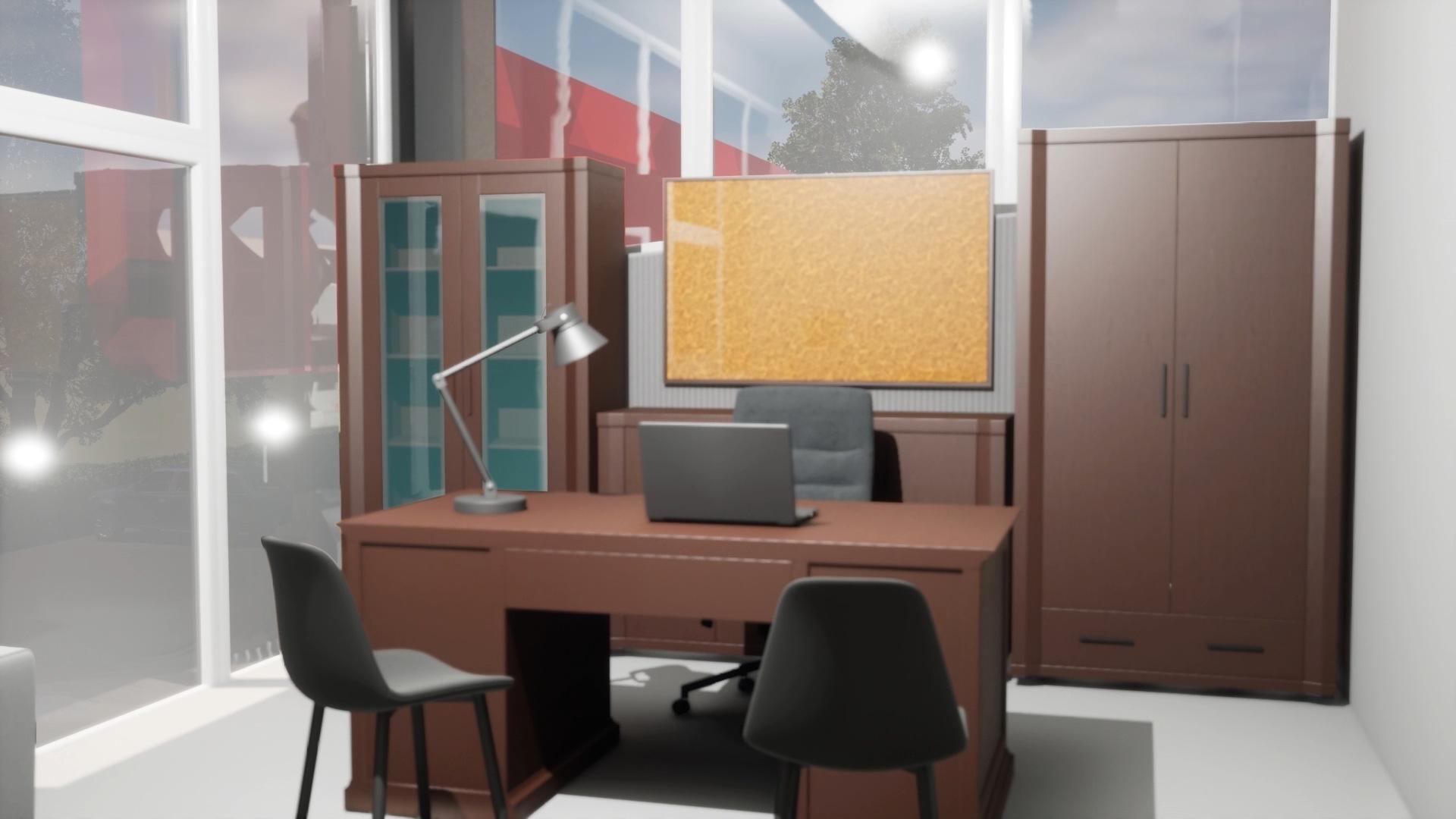
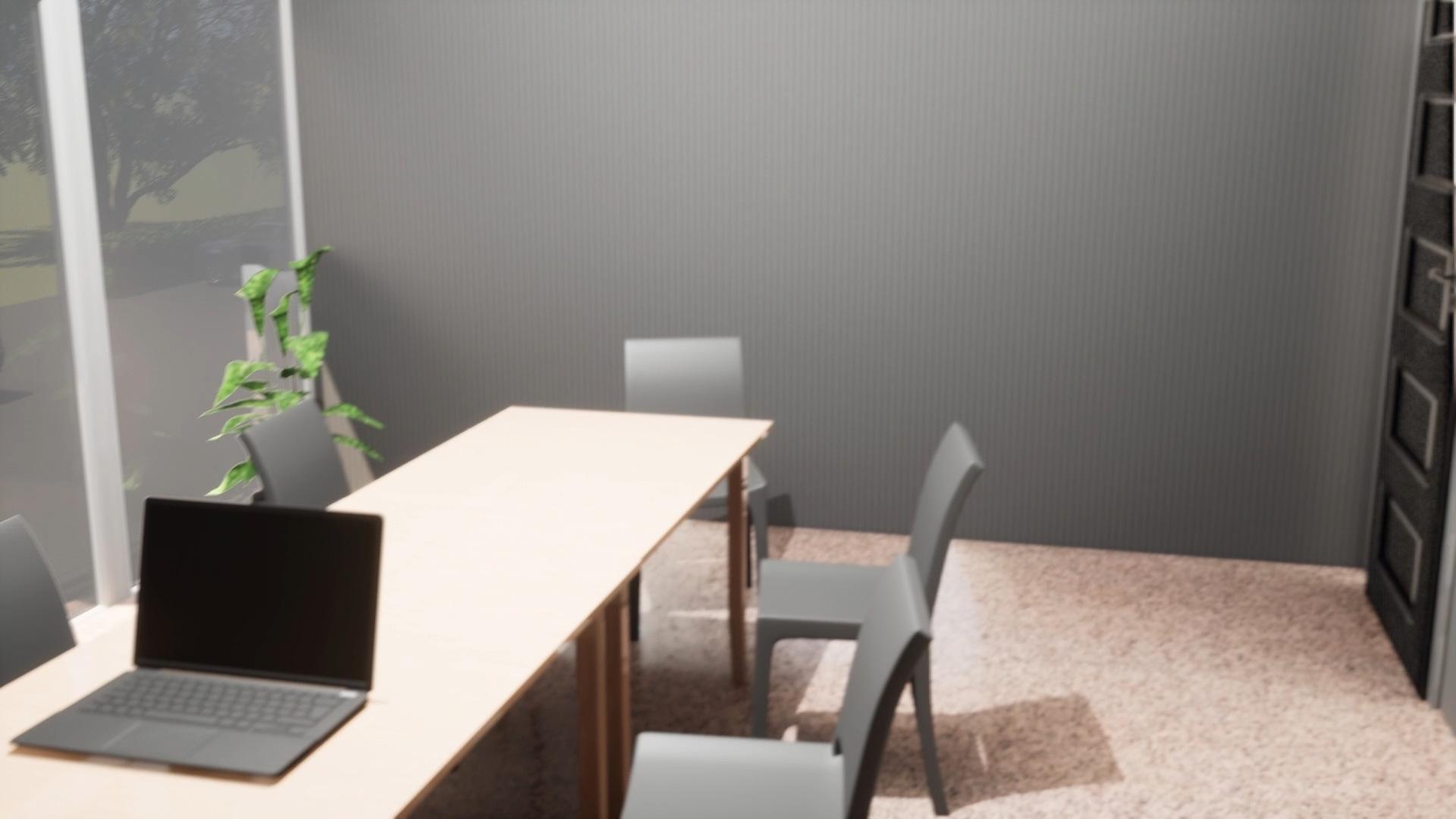
Anton Dubin's office is part of the engineering center. It is separated from the office by a wall and has an entrance from the engineering hall. The office contains a desk with a computer, where Anton Dubina works with documents, analyzes reports, and issues orders. Behind the desk is a cabinet with his belongings, and in front of it are two chairs for receiving employees, partners, and clients. Interviews with new employees and partners take place in the office, as well as discussions with engineers to solve production problems and create plans for the coming days. New projects are born in the office, production plans are drawn up, strategic decisions are made, and development plans are charted. This is not just a workplace, but a control center, a command center, a ship's bridge. Anton Dubina is not just a plant director; he is the captain of the ship, on whom production depends entirely. He issues technical assignments to the engineers and monitors their implementation. The well-being of the entire team depends on Anton Dubin. He sets the course. A plant, like a ship, can sink in an emergency. Pirates can attack the ship and steal all the technology. Other ships can overtake Anton Dubin's ship and deliver the goods ahead of it. The ship could be caught in government storms, capsized, or even sink. Anton Dubin's job is to prevent this from happening. Behind the office wall is a conference room. It has a separate entrance from the engineering hall. The room contains a long table and chairs. On the wall is a large, modern interactive screen for displaying drawings, graphs, and presentations. Meetings and briefings are held in the conference room, operational decisions are made, and contracts are signed.
11 β Engineersβ room

Technologists' seats in the engineering hall
ο»Ώ
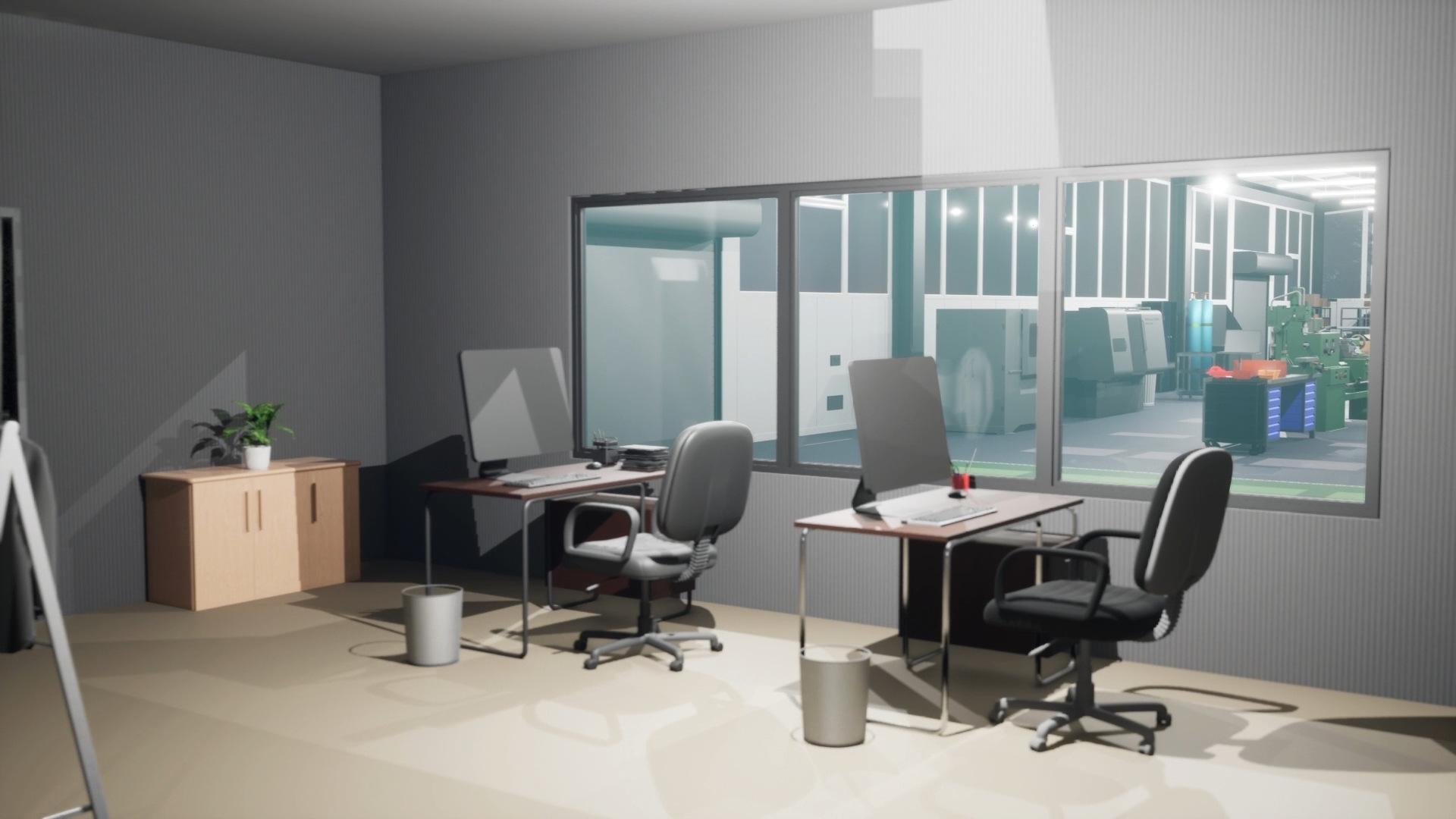
The engineering hall is a spacious room where engineers, technologists, programmers, and designers work. The engineering hall is separated from the production area by a wall with windows. The windows in the wall create more visual space in the room and also allow for observation of the assembly shop and engineering hall. Next to the entrance to the engineering hall are the engineers' desks behind the windows. All work in the engineering hall is divided into departments: machine parts, electrical engineering, software, and design. Engineers develop new parts, design electrical circuits, integrated circuits, and batteries. Technologists develop manufacturing technology for parts. Programmers perform hardware programming (programming parts to perform specific functions) and web programming. Designers develop designs, animate 3D models, create website designs, create advertisements, and edit videos. There is a hierarchy among engineers, with senior and junior engineers; for example, a senior technologist reviews the technology developed by a junior technologist. The position of deputy director is performed by a senior design engineer.
12 β Canteen

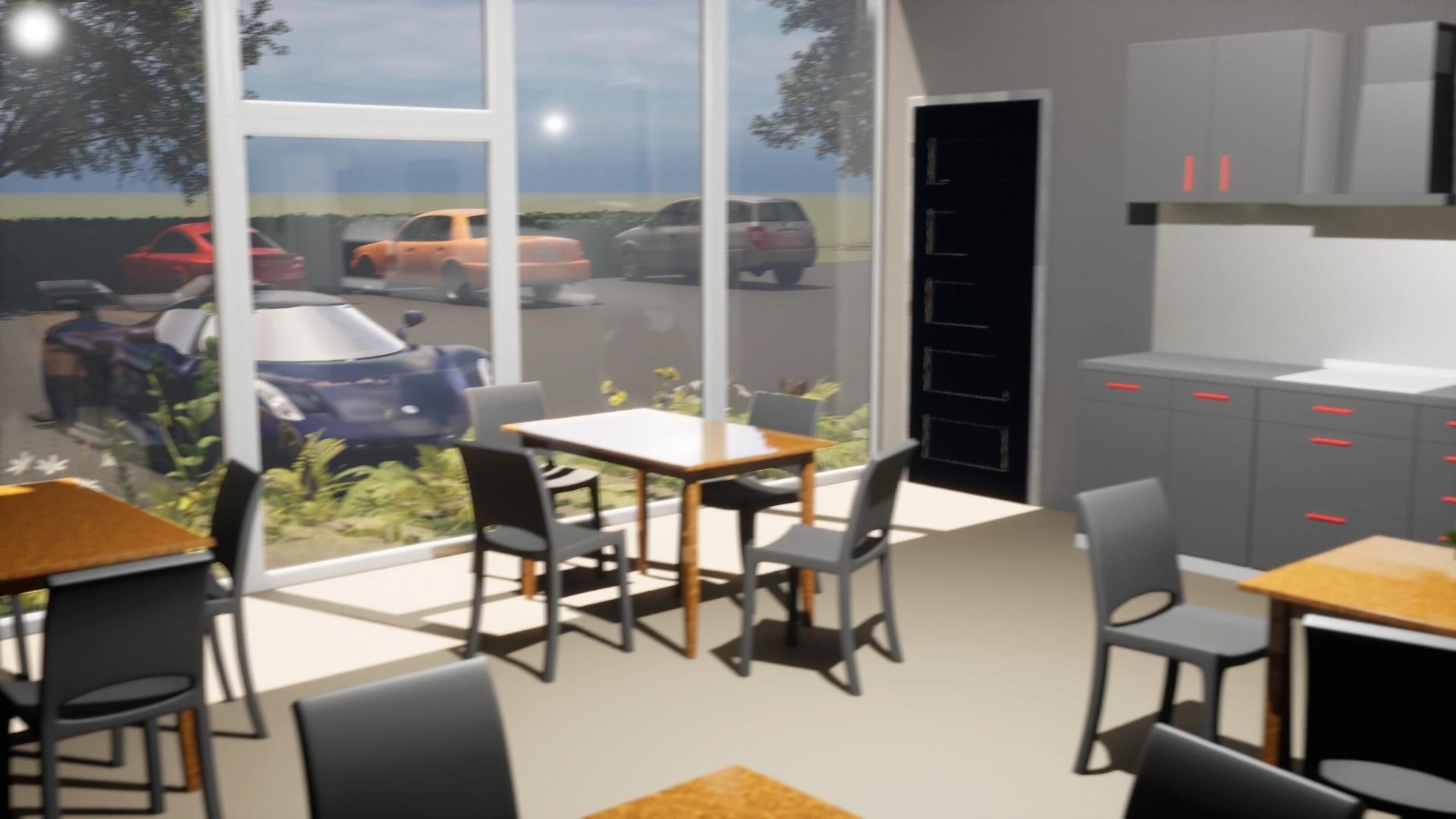
The canteen is located on the ground floor on the right side of the plant. The entrance to the canteen is in the hallway. A kitchen area with wall and base cabinets, as well as a work surface, is located against the wall next to the entrance. The kitchen is equipped with a refrigerator, sink, two-burner electric stove, and a range hood. The cafeteria has four square tables with plastic chairs. The canteen seats 16 people. The furniture is arranged to ensure easy movement between rows and maintain a comfortable atmosphere during meals. The table surfaces are made of moisture- and damage-resistant material, which is important for daily use. The cafeteria is spacious and well-lit thanks to panoramic windows overlooking the plant's parking lot and the grounds. Natural light creates a cozy and open feeling. Meals in the cafeteria are free. The plant has a lunch hour from 12:00 PM to 1:00 PM, during which time all plant employees can have lunch. It's also customary to drink tea at 3:00 PM at the plant. Lunch is prepared by a worker in charge of housekeeping. She prepares lunch daily, taking into account typical preferences and the need to provide nutritious and relatively inexpensive meals for employees. The menu changes daily to ensure variety. For example, the lunch menu includes the following: first course: kharcho or borscht soup, chicken noodle broth. Second course: buckwheat porridge, pasta, mashed potatoes, meat cutlet, chicken or pork goulash, fried fish. Fresh cabbage and carrot salad, vinaigrette. Pastries: fresh bread. Beverages: dried fruit compote, tea, fruit drink, coffee. Sour cream, mayonnaise, and mustard are always kept in the refrigerator. For dessert, the worker makes a charlotte with apples, pears, or bananas and sprinkles it with ground cinnamon, which gives it a pleasant aroma. Everything prepared is placed on special plates containers and stored in the refrigerator.
13 β Toile
The toile is located in the plant's hallway next to the entrance to the plant, the entrance to the assembly shop, and the entrance to the engineering hall. The restroom contains a toilet and a sink. This small but vital space within the plant determines the well-being of all plant employees.
14 β Hallway
ο»ΏThe plant's hallway is the entryway connecting all the main rooms of the building. All plant employees pass through the hallway upon entering the building. It contains doors to the production department, the engineering room, the kitchen, and the restroom. The hallway is lit by natural light through a glass wall and door. During cold weather, the hallway serves as a thermal vestibule, preventing warm air from escaping from the building and reducing heat loss.
Factory personal
ο»Ώ
The factory personal is like a single sports team. The team is led by factory director Anton Dubina. The entire team consists of sixteen people: the factory director, senior designer, junior designer, senior technologist, junior technologist, senior hardware programmer, junior hardware programmer, senior web programmer, junior web programmer, assembler, machine operator, electrician, welder, molder, painter, and household worker.
1. Factory director
The factory director is the most important figure in the company, responsible for the overall production process. They organize an efficient, stable, and safe production process. They plan and delegate responsibilities daily with engineers. They set priorities, analyze previous work, and implement design changes. They interview new employees and meet with customers. They possess a well-developed technical mindset and a deep understanding of all production processes, anticipating potential difficulties. They are resilient to stress, responsible, and disciplined. They combine leadership qualities with the ability to engage in dialogue and find compromises with employees.
2. Senior Designer
The Senior Designer is the most important specialist in the engineering center, substituting for the Plant Director when necessary. Their workstation is located next to the Director's office. The Senior Designer creates new products, develops, and verifies design documentation, oversees parts from development to production, monitors the quality of manufactured parts, makes adjustments based on test results, improves the design of manufactured products, plans, organizes, and optimizes production processes, implements innovations, and increases plant efficiency, monitors deadlines and product quality. They also hold planning meetings with other engineers, collaborate with the Director, review junior engineers' documentation, advise employees, and propose modernization ideas.
3. Junior Designer
The work of a junior designer is similar to that of a senior designer. A junior designer creates new products, optimizes production processes, implements innovations, and improves plant efficiency, but the junior designer performs less complex and responsible tasks. A junior designer does not replace the director in his or her absence. The senior designer reviews the junior designer's work. The junior designer prepares reports and design documentation for the senior designer.
4. Senior Technologist
The Senior Technologist develops and implements production processes for creating parts and designs submitted by the designers. After receiving documentation from the designers, they analyze the part designs, determine optimal manufacturing methods, and adapt the technology to the capabilities of the machines, 3D printers, welding equipment, assembly area, and paint booth. They monitor the manufacturability of the parts and the compatibility of all components, prepare process charts for employees, maintain order in the workstations, and check for compliance with safety and sanitary standards. The technologist's workstation is located near the assembly area. The Senior Technologist participates in morning meetings in the conference room, where production tasks, problems, and solutions are discussed. They propose changes aimed at increasing efficiency, reduce process risks, and ensure the stable operation of the entire production line. Thanks to their work, the plant produces high-quality parts and maintains a smooth production cycle.
5. Junior technologist
The work of a junior technologist is similar to that of a senior technologist. When the senior technologist is absent, the junior technologist replaces them. The junior technologist acts as a storekeeper. They accept the delivery of parts and materials, monitor their placement and storage in the warehouse, and conduct inventory. The junior technologist inspects manufactured products, tests new technologies, and prepares progress reports for the senior technologist. They monitor compliance with safety and sanitary standards and explain production technology to employees.
6. Senior Hardware Programmer
The Senior Hardware Programmer is responsible for the development, configuration, and maintenance of software and embedded systems used in production processes and in the design of the vehicle being developed. They work with electronic control units, sensors, actuators, and circuits, ensuring their proper integration into the product and plant equipment. In their work, the Senior Hardware Programmer works closely with the Director, who sets tasks related to the development of vehicle electronics functions and equipment automation. They collaborate with designers on the creation of vehicle electronic components, coordinating the placement of controllers and sensors. Together with process engineers, they determine methods for programming and testing electrical equipment in the workplace, helping to adapt technological processes to electronic components and their calibration. The Senior Hardware Programmer develops firmware for controllers, writes programs for CNC machines and test benches, creates a diagnostic system, and ensures the stable operation of vehicle electronics. They work in microcontroller development environments, using low-level languages ββ(C, C++), schematic CAD systems, and debugging tools. Required skills include a strong knowledge of electronics, circuit design, digital and analog systems, data exchange protocols, a strong grasp of microcontrollers, and experience with manufacturing equipment.
7. Junior Hardware Programmer
Like the Senior Hardware Programmer, the Junior Hardware Programmer writes programs for manufactured devices, flashes controllers, configures sensors, and prepares software for production equipment. However, their work involves less complex and less critical tasks. Junior programmers create individual firmware modules, debug programs, analyze simple errors in device logic, and conduct testing. They are responsible for specific tasks related to programming and testing electronic devices used in the factory and in vehicle design. Their workstation is equipped with a desktop computer, debug boards, microcontrollers, power supplies, and measuring equipment to verify the functionality of the developed code and hardware circuits. Junior programmers actively participate in testing the vehicle's electronic systems, assist with setting up test benches, and monitor the correct operation of the equipment after changes are made. They have basic knowledge of circuit design, microcontrollers, data exchange protocols, the C and C++ programming languages, and are proficient in using measuring instruments and debuggers. A junior hardware programmer works under the supervision of a senior hardware programmer. They receive technical specifications from the senior hardware programmer and coordinate their work with the designers, who determine the layout of the electronics in the vehicle, and with the technologists, who establish the procedure for testing and calibrating equipment in production.
8. Senior Web Programmer
The Senior Web Programmer is responsible for developing high-tech network solutions that enable vehicle connectivity with external services. They create programs for interaction between the onboard control unit and cloud platforms, navigation services, remote diagnostic servers, and firmware updates. Their work includes designing the architecture of network modules, configuring data transmission security systems, developing APIs, and integrating vehicle electronic components with internet services. They solve the most complex problems, develop technical requirements, and monitor the correct implementation of vehicle network functions. The Senior Web Programmer collaborates with the Director, who defines functional requirements, as well as with hardware programmers and designers who ensure compatibility between electronics and software.
9. Junior Web Programmer
The Junior Web Programmer develops and supports the plant's online resources, including the online store and the company's official website. They create web page designs, application interfaces, and visual elements, ensuring a user-friendly experience with the company's services. They are also responsible for installing and configuring web applications running on the vehicle's microcomputer, preparing user panels, updating interface elements, and conducting testing. The Junior Web Programmer is responsible for the user-friendliness and visual quality of digital services, ensuring employees and customers have access to the necessary functions and information. Their work involves performing application-specific tasks under the supervision of a senior specialist, adjusting visual and software functionality, and adapting web applications to the plant's requirements.
10.Β Β Β Β Assembler
The assembler assembles the vehicle in the assembly area. Assembly is the single, final operation of the entire production cycle. In a single location, they attach the frame to the monocoque, sequentially install the components, and mount the suspension, transmission components, electrical wiring, assemblies, electronic units, control systems, and auxiliary equipment. All operations are performed according to a process chart developed by the process engineer, adhering to the specified sequence and requirements for tightening torques, clearances, and tolerances. During the process, the assembler constantly monitors the accuracy of the component installation and their mutual compatibility. If any discrepancies, defects, or inconsistencies are discovered during assembly, they immediately notify the process engineer or designer for prompt resolution. This feedback allows for rapid design or process changes and improved final product quality. The assembler can suggest a more convenient, faster, or safer method for component installation, optimize the order of operations, and simplify the assembly process. These suggestions are reviewed by the process engineer and, if necessary, incorporated into the production documentation. The assembler is highly qualified, attentive, meticulous, and responsible. The reliability, functionality, and quality of the finished vehicle directly depend on their actions. It is at the assembly line that the vehicle acquires its finished appearance and is ready for use, making the assembler a key figure in the plant's production process.
11. Machine Operator
A machine operator is a highly skilled specialist who manufactures parts in the machining department. They possess in-depth knowledge of mechanical engineering, are skilled in reading blueprints, and are able to work with CNC programs. The precision of parts, the reliability of components, and the overall quality of the vehicle produced by the plant depend on their professionalism. Their work focuses on CNC machines, turning and milling machines, as well as additive manufacturing equipment. Using digital models in accordance with design documentation and process charts, the machine operator manufactures parts from blanks. On CNC machines, they perform precision surface finishing, drilling, milling, and turning operations. On lathes, they manufacture hubs, drive shafts, and steering gear components, while on milling machines, they manufacture gears and racks. In the additive manufacturing department, the machine operator 3D prints suspension knuckles, electric motor housings, and gearbox housings. After machining, the machinist cleans the surfaces of the parts, removes burrs, performs dimensional inspection, and checks the dimensions and geometry of the mounting surfaces using measuring tools. The machinist then transfers the finished parts to the assembly area, ensuring the continuity of the production process. The machinist is also responsible for monitoring the technical condition of the equipment. Machines require constant monitoring, adjustments, and timely repairs, so the machinist is able to detect malfunctions at an early stage, replace worn components, and prevent accidents. During operation, the machinist identifies machining defects and suggests solutions. If necessary, they can suggest changes to the process if this improves the quality of the part or reduces its production time.
12. Welder
A welder welds metal structures in a specialized welding area. The strength, geometry, and safety of a vehicle's load-bearing components depend on their work. This profession requires high qualifications, precision, physical endurance, and strict adherence to welding procedures. The welder's primary task is the fabrication and assembly of metal components and structures. They weld vehicle frames and suspension arms made of aluminum alloy. Welding is performed using a semiautomatic arc welding process in a shielded gas environment, ensuring high-quality welds, minimal deformation, and a secure connection between structural elements. Before welding, the welder secures the frame components on a jig, locking them in their intended position to maintain the precise geometry of the structure and prevent distortion. After securing the components, they weld the joints sequentially, monitoring the welding conditions, penetration depth, and weld appearance. Welding is subject to strict safety requirements. They wear special protective clothing, a welding mask, and respiratory protection. Welding produces harmful gases, so the welding area is equipped with additional exhaust ventilation, and the welder wears a mask with gas mask functionality. Upon completion of welding, the welder cleans the welds, removes any burrs, and prepares the surface for subsequent operations. Depending on the process flow, the finished welded structures are transferred either to the paint shop for corrosion protection and finishing, or to the assembly area.
13. Electrician
An electrician assembles, installs, and tests all electrical and electronic systems in a vehicle. Their work covers both individual electronic components and complex electrical circuits that provide power, control, and safety for the vehicle. They install electrical circuits, cables, connectors, fuses, and switching elements, assemble control units, the electric motor speed controller, batteries, and distribution units. When assembling batteries, the electrician connects the components into modules, installs control and protection systems, checks for proper balancing and contact reliability. When working with the speed controller, they install power and signal circuits, adjust operating parameters, and prepare the device for further testing. Particular attention is paid to the quality of insulation, proper wire marking, and protection of electrical connections from vibration and external influences. After installation, the electrician tests the electrical circuits: measures resistance, checks for short circuits, and checks the functionality of components under load. If any malfunctions are detected, they identify the causes, correct the defects, and, if necessary, report the issues to a technologist or designer. All operations are performed in accordance with electrical diagrams and process documentation developed by technologists. An electrician's work requires knowledge of electrical engineering. The reliability of the vehicle's electronic systems, operational safety, and the stable operation of all electrical components during subsequent vehicle operation depend on their qualifications.
14. Molder
The molder manufactures parts and assemblies from composite materials used in vehicle construction. Their work involves high-tech molding processes that require precision, accuracy, and a thorough understanding of material properties. They prepare molds, clean them, and apply release agents, then lay down the prepreg layers according to the process chart. The molder monitors the fiber direction, the number of layers, the correct placement, and the uniformity of the mold filling. The molder also performs the vacuum forming process. They place the part in the mold, seal the package, connect the vacuum system, and control the pressure, temperature, and holding time during the molding process. They ensure that the product is free of air inclusions, wrinkles, fiber displacements, and other defects that affect the strength and quality of the part. The molder collaborates with the senior technologist, receiving process charts, instructions, and molding cycle parameters from them. They coordinate part specifications with the designers, clarifying dimensional requirements and tolerances. After the part is manufactured, the molder performs visual quality control, prepares the product for mechanical processing and transfers it to the mechanical processing area or to the paint booth.
15. Painter
The painter works in a specially equipped paint booth, complete with ventilation, filters, a drying system, protective lighting, and temperature control. They use professional equipment: spray guns, grinders, air lines, filters, and special respirators. The painter's workstation includes not only the booth itself but also the equipment room of the paint shop, where filters, hoses, protective clothing, and tools are stored. They wear special suits, gloves, masks, and respiratory protection systems. They sand parts, remove defects, degrease, apply primer, paint, protect against corrosion, and inspect the coating. Painters combine professional skill with artistic flair and technical precision. They possess high concentration, accuracy, and knowledge of paint application technology. They adhere to safety regulations, as they work with solvents, aerosols, and hot air near electrical equipment. The car's appearance, evenness of the coating, absence of defects, and durability of the paint layer depend on their work. The painter receives parts for painting from the assembly shop, and after painting, the painter delivers the painted parts to the assembly stage. The painter collaborates with the technologist, who determines the application methods, the work sequence, and the quality requirements for painting, when color changes are required, a new material is selected, or a surface quality issue is addressed.
16. Housekeeping Worker
The plant's housekeeping worker is responsible for maintaining cleanliness and order throughout the entire facility. Her work encompasses administrative offices and production areas. She daily ensures employees can perform their jobs safely and effectively. Her responsibilities include cleaning offices, the engineering room, locker rooms, hallways, cafeterias, and auxiliary spaces. She mops floors, wipes surfaces, dusts equipment, and maintains the restrooms. In the kitchen, the housekeeping worker prepares lunch for employees, washes dishes, and maintains order. In the production shop and engineering room, the housekeeping worker sweeps the floors, collects small debris, and takes out the trash. A clear plastic container is kept in the shop where she places small items found on the floorβbolts, nuts, washers, and paper clips. This simple yet very useful solution allows workers to quickly find lost parts and prevents them from getting lost or getting into equipment. She trims hedges and cleans up trash on the factory grounds. Her meticulousness and attentiveness make her an indispensable member of the team, ensuring the factory maintains impeccable housekeeping.
Lighting

The plant uses natural sunlight and artificial light for lighting. During daylight hours, natural light predominates thanks to large windows located around the building's perimeter and in the roof, allowing sunlight to penetrate into all areas of the plant. Windows are located throughout the plant. Windows are located at a height of 2.5 meters in the locker room and restroom. This ensures sufficient daylight without the need for constant artificial lighting. Artificial lighting is provided by LED lamps. In the assembly shop, 42 rectangular 100-watt LED lamps are suspended from metal purlins. These lamps are 300 cm long and 20 cm wide, and their color temperature is 5000 Kelvin, which corresponds to daylight and ensures accurate color rendering during assembly work. Nine similar lamps are installed in the engineering room, providing equally bright and uniform illumination of the work areas. The paint booth uses special protected and sealed luminaires mounted in the walls and ceiling. They are designed to withstand high aerosol concentrations and provide uniform illumination of all surfaces for high-quality painting operations. The paint booth doors have windows that allow sunlight or light from the assembly shop lamps to enter. LED lamps are suspended above the building entrance, above the gates, and under the eaves, ensuring good visibility throughout the plant at night.
Doors
The entrance doors are swing metal with windows. The assembly shop has swing metal doors with windows. Interior doors have been installed in the engineering room, Anton Dubin's office, conference room, restroom, and cafeteria. Metal doors have been installed in the locker room and paint booth preparation area.
Heating.
The mini-factory is heated by sixteen electric convectors, each with a power of 2 kW
Considering the mild winters and average air temperature of +12 Β°C, this system is optimal for maintaining the working microclimate.
To ensure a comfortable temperature at the plant in the humid subtropical climate, a system of sixteen electric convectors with a total capacity of 32 kW is used.
This modern heating device is enclosed in a steel housing shaped like a rectangular parallelepiped with dimensions of 120 Γ 60 Γ 6 cm.
Please do not open any links and do not make calls (including WhatsApp) to any numbers from messages sent by accounts such as Grabcad Verification, etc. - these are phishing ones. Please do not make any payments. Our security team is currently working on a solution.