
Learn about the GrabCAD Platform
Get to know GrabCAD as an open software platform for Additive Manufacturing
Visit our new homepage
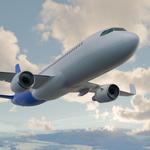

Project from 3D constructor - https://dubina.biz
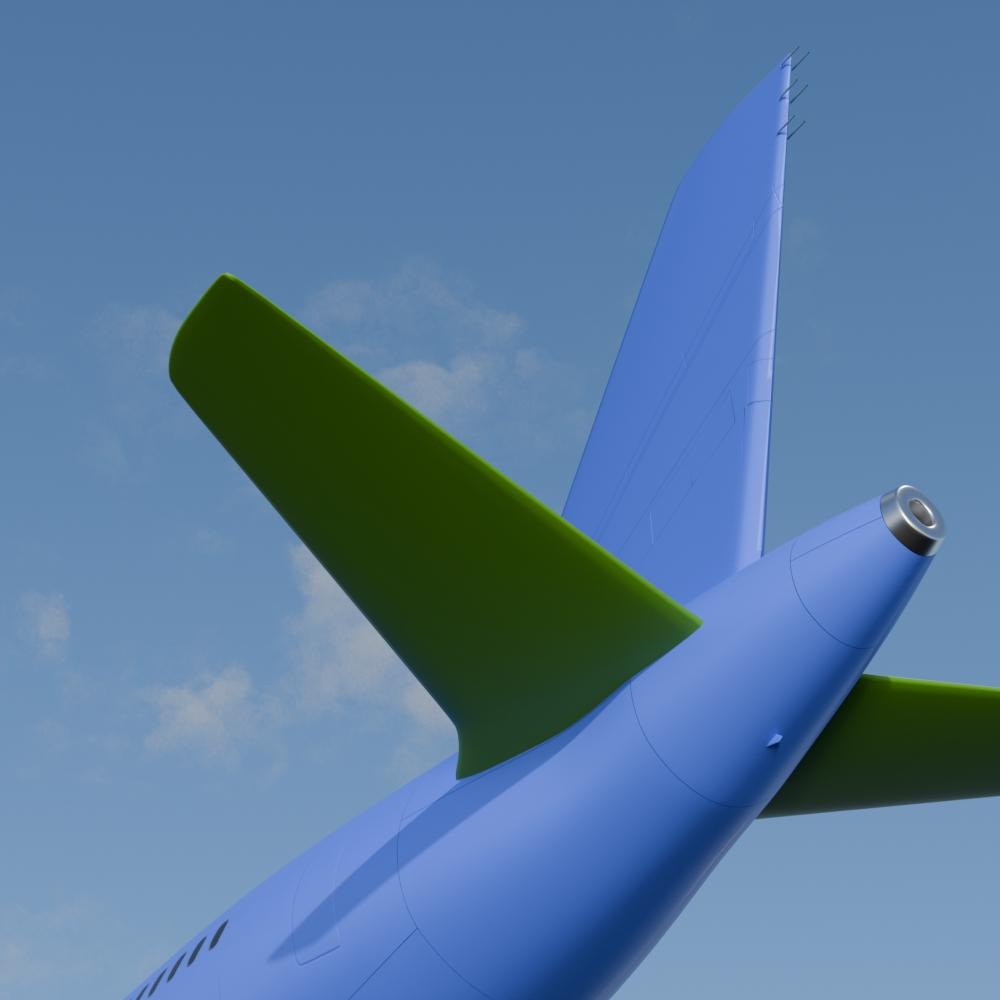
The A37's horizontal stabilizer is a key element of longitudinal balance and stability, designed to generate the necessary balancing aerodynamic moment across the entire range of center-of-gravity (CG) speeds and flight modes. Unlike aircraft with a fixed stabilizer and large elevators, the A37 uses a rotating stabilizer with a variable pitch angle, which effectively compensates for changes in wing lift during high-lift extension, engine thrust changes, fuel redistribution, and center-of-gravity shifts. The stabilizer's pitch angle is controlled automatically via a fly-by-wire flight control system, which, in response to computer commands, smoothly adjusts its position, ensuring stability and reducing the need for constant pilot adjustments. The elevator is used primarily for dynamic control and maneuvering, rather than for constant aircraft trim. This design reduces tail drag, as the stabilizer operates near the optimal angle of attack and does not require large control surface deflections, which is especially important during long-haul cruise flight. The A37's horizontal stabilizer design is engineered to withstand significant aerodynamic and inertial loads and includes a powertrain and drive mechanisms that ensure high positioning accuracy, reliability, and service life under intensive use. As a result, the use of a horizontal stabilizer in combination with a fly-by-wire control system allows the A37 to maintain stable and efficient longitudinal balance at all stages of flight, from takeoff and climb to cruise descent and landing.
While the trimmable horizontal stabilizer (THS) adds weight and complexity to the design, eliminating it would have led to far more serious problems.
The primary cause is aerodynamic drag. If the stabilizer were fixed, pilots would have to constantly maintain a certain elevator deflection to trim the aircraft (to ensure it flies level and does not nose-dive or tail-dive). A deflected elevator disrupts the airflow and creates significant trim drag. The movable stabilizer pivots entirely, adjusting to the airflow. This keeps the elevators in a neutral position ("downstream"), minimizing drag. Bottom line: Without a movable stabilizer, fuel consumption would increase dramatically, negating any gains from the weight savings.
Another important factor is the wide range of center of gravity (CG) positions. On commercial flights, aircraft loading is constantly changing: passengers are seated differently, cargo in the overhead compartments is distributed unevenly, and fuel is consumed during flight, shifting the center of gravity. Elevators have a limited area and deflection angle. If the CG position is too forward or too aft, the elevators may simply not have enough travel (control reserve) to maintain the aircraft in level flight. A movable stabilizer offers a much larger area and power, allowing the aircraft to be trimmed over a very wide range of CG positions.
Takeoff and landing performance are also important. Extending the flaps creates a powerful nose-down moment (pulling the aircraft's nose down). To compensate for this moment with the elevators alone, they would have to be deflected almost all the way up. This would leave the pilot with very little control for maneuvering. Pivoting the stabilizer to a nose-up pitch compensates for the flap moment, leaving the elevators free for direct pitch control.
Stabilizer mechanization is a compromise. Increased weight and added mechanization (by adding a screw jack and hydraulic motors) are tradeoffs for fuel efficiency and safety. Removing the stabilizer's movability would make the A37 a glutton for fuel, limiting passenger seating arrangements and making it more difficult to control at low speeds.


Please do not open any links and do not make calls (including WhatsApp) to any numbers from messages sent by accounts such as Grabcad Verification, etc. - these are phishing ones. Please do not make any payments. Our security team is currently working on a solution.